
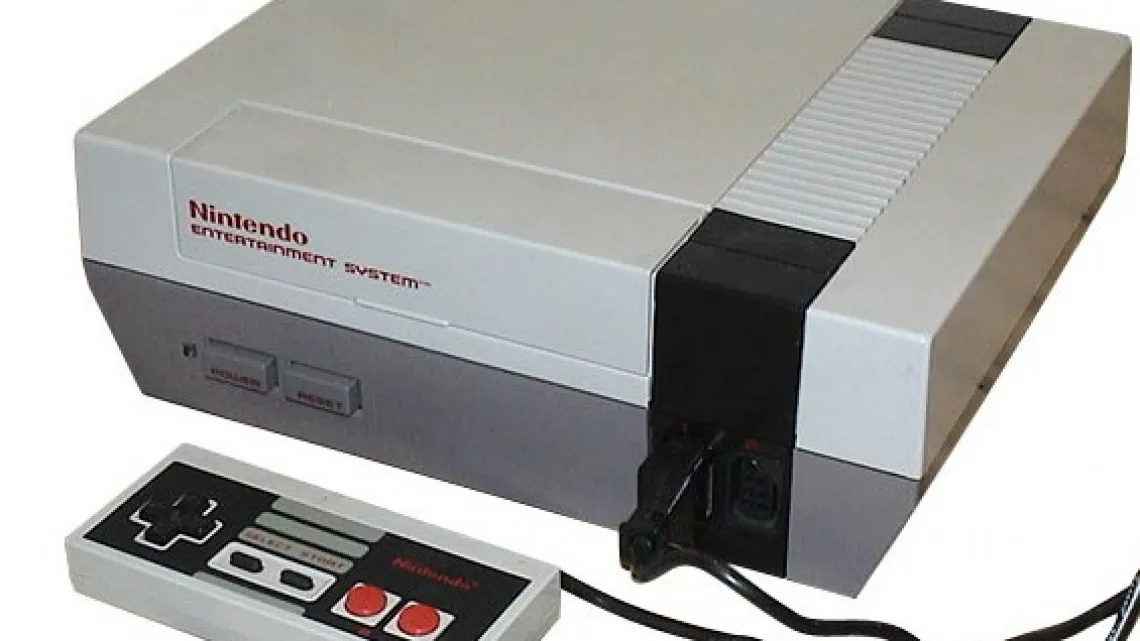
 The Nintendo Entertainment System (NES, known as the Famicom in Japan, short for Family Computer) was the first console released by this giant of the gaming industry. The arrival of the NES was a huge turning point in gaming history, since it was an entirely new system that would go on to define many standards. During the early eighties, Nintendo already had several major arcade hits under its belt, such as Donkey Kong and Punch-Out!!, which were later ported to the consoles of the time, such as the ColecoVision. Recognizing its opportunity, the company began secretly developing a platform that was supposed to be built around a 16-bit processor, include a floppy disk drive, and carry a very low starting price of between 75 and 100 dollars. Of course, the final product turned out to be an 8-bit machine using cartridges as its medium, and its sales in Japan began on July 15, 1983. The first buyers were offered 3 games already familiar from arcades — Donkey Kong, Donkey Kong Jr., and Popeye. After overcoming some initial reliability issues, the console achieved incredible success, reaching a run of as many as 2.5 million units by the end of 1984, which encouraged Nintendo to try to launch the console outside its home country as well. Despite all the distribution-related problems, it fully succeeded, taking on an enormous business risk in the process.
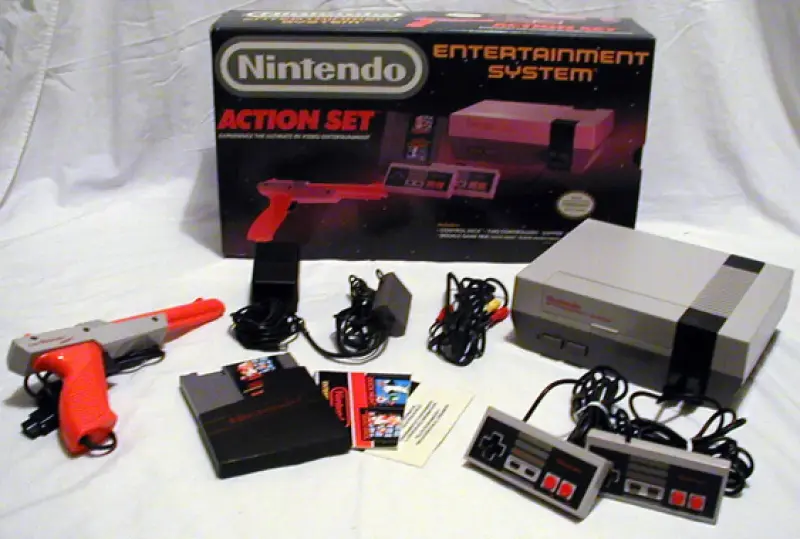
 The original NES shipped in several different packaging variants
By 1990, the NES had sold 19 million units in the US alone, and nearly 62 million worldwide over roughly a decade — a truly impressive figure, even compared to today's consoles, which have access to a much wider market. Statistically, one in every three households in Japan and the US owned an NES, a feat that, many years later, only the PlayStation, PlayStation 2, and Wii could match. This makes the NES, alongside the Wii, Nintendo's best-selling home console, far surpassing the SNES, Nintendo 64, and GameCube.
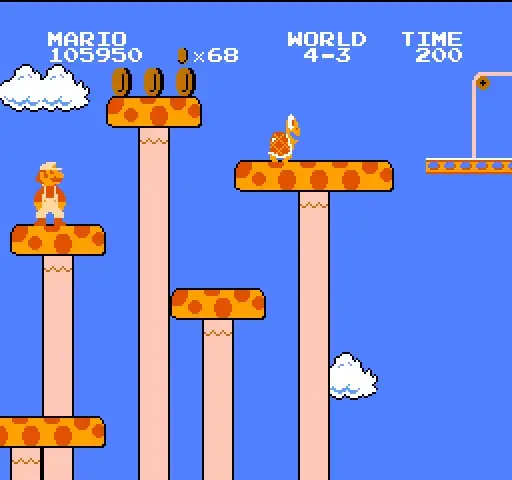
No gaming system has ever enjoyed such support from software houses, so the number of released (licensed) titles is extremely large, certainly exceeding 800, and according to some sources even 1000. The first games came out of production as early as 1983 (for the Famicom, of course), and the officially last title published by Nintendo itself was Wario's Woods at the end of 1994. The best-selling release on the system is Super Mario Bros. 3, which sold over 7 million copies in the US, 4 million in Japan, and between 2 and 3 million in Europe, earning over 500 million dollars in the US alone — the second-highest result in the history of the entertainment industry, right behind the film E.T. The total number of cartridges sold is estimated at 350 million.
The NES controller is very simple, featuring just the basic D-pad plus 4 buttons. From today's perspective, its biggest shortcomings are its small size and lack of ergonomics, which can become a problem during longer sessions, especially if you have large hands. What deserves praise is its build quality — it's genuinely excellent, so the odds of something breaking on it are practically nil (in the case of this article's author, after 5-6 years of intensive play, only the rubber pads under the buttons ever needed replacing, while the plastic itself remained completely undamaged). In short, compared to what Atari and others offered, this was a true revolution that established the joypad as the controller of the future, ideal for nearly every type of game and equally comfortable for left- and right-handed players. Alongside it, the NES also supported special peripherals such as the excellent Light Gun, the obscure Power Pad, or the Power Glove (the less said about that one, the better).


A few words about the console's rather unusual design. The Famicom looked completely different, and more importantly, its cartridges (which Nintendo called "game packs") were inserted into a slot on top of the console — the most logical solution. On the other hand, the NES loaded games in a way similar to video cassettes, except that afterward you still had to press the cartridge down for it to click into place inside the housing. The consequence of this design was that the mechanism wore out fairly quickly (the connectors were terribly prone to corrosion), so malfunctions were a very common occurrence.
However, this wasn't some random whim or design flaw — it was actually a very deliberate, or rather forced, move. Nintendo had to do this to hide from American retailers the fact that the NES was "just" a regular game console, which the very name of the system hinted at. This skepticism from distributors was a direct result of the enormous losses Atari had suffered just a year earlier, losses that drove the industry into what's known as the Great Video Game Industry Market Crash — a period during which gaming practically flatlined. What's fairly little-known is that Nintendo later released a more compact NES 2 (a slim concept that Sony would later adopt) which solved this problem, though that didn't happen until 1993. The NES 2 was completely redesigned, including the controller, which by then closely resembled the one used on the SNES. Its starting price was just $50, and its other key selling points were its dimensions — half the size of the original — and its more modern design. However, it was only sold for about a year, since Nintendo decided to fully commit to its 16-bit console instead. The cartridges themselves were fairly large and typically gray, with the exception of a handful of games that had the privilege of coming in a striking gold variant — a distinction shared by both Zelda titles.
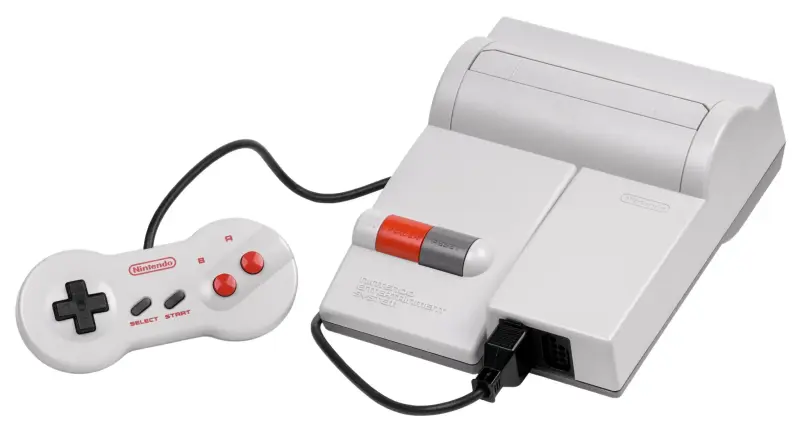
 The completely redesigned NES 2
The console's technical capabilities weren't all that advanced, though the NES was still able to offer far more than the consoles and computers that already existed at the time, with the exception of the Amiga, which nevertheless never posed a serious threat to it. Although the Sega Master System, which arrived the following year, was noticeably more powerful (especially in terms of color reproduction), it never saw anywhere near as many technically polished releases as the NES did. Speaking of games, this very console saw the debut of the first entries in Final Fantasy, Dragon Warrior, Zelda, Contra, Metroid, and many other series that are still very much alive today. Likewise, Metal Gear and Castlevania only achieved cult status thanks to the NES, since their earlier MSX versions had gone practically unnoticed.
In short, the NES marked the beginning of the modern gaming era. Just consider everything it brought with it: a record number of released games, a far better graphics and sound chip than its competitors, the joypad, additional peripherals, and finally, global popularity — in the US and Japan it was unrivaled (at one point holding 95% of the market in the former and 92% in the latter), while in Europe it trailed behind Sega but still left a significant mark, especially in Western countries. The NES lives on today thanks to excellent emulators such as VirtuaNES, and Nintendo launched its own Virtual Console service, which allowed Wii owners to play many of its timeless hits on that system.
The phenomenon on our local market of "buying" (if acquiring pirated games can even be called that) whatever was cheaper rather than better meant that the NES remained almost unknown in our country during the years of its greatest global fame. Unfortunately, all of this had a negative effect on the upbringing of an entire generation of gamers — a topic we've already written about several times.
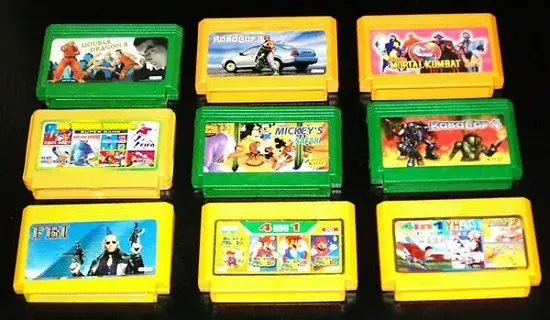
The clone wars The relatively simple hardware combined with the system's incredible popularity contributed to a huge number of pirated clones flooding the market, running rampant in the mid-nineties in countries Nintendo didn't pay much attention to. Specifically, Serbia was flooded with all sorts of NES variants that most often "borrowed" their design from the Sega Mega Drive 2 (the so-called "Fake Sega"), the PlayStation, the SNES... or simply modified the original design. What they all had in common was terrible build quality, especially the controllers, which wore out at record speed. Most of these consoles used NES-on-a-chip technology, which comes with certain limitations, manifesting as bugs, incorrect color reproduction, or even the inability to run certain titles, such as Castlevania III. Interestingly, these systems themselves are often not actually illegal, since Nintendo no longer holds the relevant patent rights, which is also why it lost several lawsuits — for instance, against a certain "Gametech" back in 2005.


NES – Nintendo Entertainment System (1985)
A game that could have been much better.

Comments (0)
Be the first to comment!
Leave a comment as a guest