Ubisoft, the family run and once commercially more-prominent-than-it-is-now French video game publisher, is in an odd place at the moment. For a spell in the late-noughties to 2010s it looked like it
Ubisoft, the family run and once commercially more-prominent-than-it-is-now French video game publisher, is in an odd place at the moment. For a spell in the late-noughties to 2010s it looked like it had be inducted into the pantheon of the too big to fail global publishing giants. Nipping on the heels of the said too big to fail likes of Activision, Electronic Arts and Take-Two. Largely this was the result of developer innovation within the open-world genre at a key time of its maturation, making Ubisoft’s business appear robust and enduring from the outside; much like Susan Boyle’s career during her prime.
Supported furthermore by well-liked and well-rounded IP such as Far Cry, Rayman, Red Steel, Just Dance, Tom Clancy, Valiant Hearts and Starlink: Battle for Atlas, it was a formula that worked for a while, although, after a combination of over-milking, internal but very public scandals, mass lay-offs, the shuttering of studios and otherwise underperforming, delayed, cancelled or vapourware titles (Beyond… cough, cough… Something 2…) in the docket, the company has in recent years been in a financial freefall. It is from this context Ubisoft finds itself returning to its most successful open-world franchise that it did all the initial pioneering with, to arguably the most lauded and pirate-y instalment in the series.
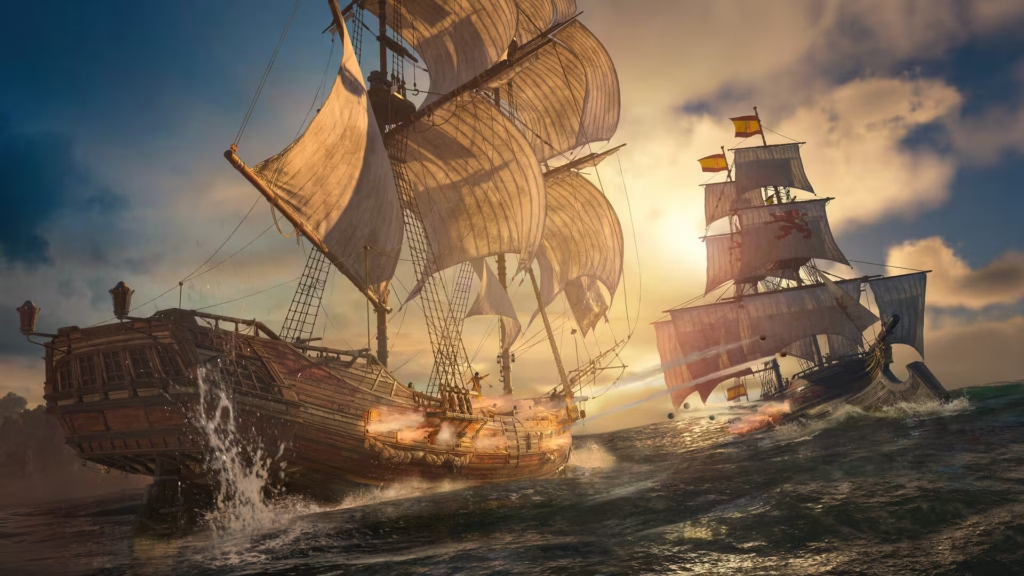
Assassin’s Creed: Black Flag Resynced, for the uninitiated, is the modern remake of 2013’s Assassins Creed IV: Black Flag, now brought forward into the current generation on Ubisoft’s Anvil engine with an added lick of fresh ray-traced paint. It follows the story of Welshman Edward Kenway, in search of fortune and glory, set in the locale of the Caribbean islands during the golden age of piracy. Oh and, by the way, Edward is also existent within the ancestral memories of some dead guy from 2013, or thereabouts, reconstructed inside of a computer from a sample of their blood taken from the future. That guy’s name was Desmond. More about that later.
It’s refreshing that Edward starts his story as neither aligned to the Assassin’s Creed or the Templars, either of the secret organisations behind the shadow war which is the one only constant through-line in the Assassin’s Creed series, and is a war that is responsible for shaping or influencing much of human history and invention across the ages. Rather Edward Kenway approaches both factions with an irreverence, or skepticism one might say, and he is ultimately out for his own gain before it is only by luck, or perhaps misfortune, that he becomes embroiled in the struggle between the two factions. He’s a bit of a so-and-so, what someone might expect from a pirate but also an incredibly charismatic protagonist in a way that the Welsh aren’t often portrayed within media. A pirate though Kenway may be, he still has the moral fibre enough not to kill domesticated animals, which is good to know, lest a time paradox, or desynchronisation, be created. He is supported by a cast of memorable side characters keeping the plot engaging throughout Assassin’s Creed: Black Flag Resynced.
On the subject of time paradoxes, let’s get back to that one. Is it too soon in this review to mention the future timeline? Assassin’s Creed is really, as alluded to, actually set around 2013, under the corporate memory decoding remit of the probably evil conglomerate, Abstergo Industries. If the subject was to be brought up, then the possibility that it could potentially confuse a casual mass mainstream audience is high. It may put them right off their breakfast! Ubisoft seems to agree with this sentiment as the future timeline segments in Assassin’s Creed: Black Flag Resynced, following in the suit of more recent entries in the series, have taken even more of a backseat in this remake. This, being one of its narrative or structural digressions from the original title, is a shame.
These sections have admittedly had a mixed response over the years by players but it is mainly because Ubisoft had appeared to lose interest and/or wasn’t sure what to do with them to make them fit. Whichever side one’s opinion lands on these sections, they do go a long way a-ways toward defining the franchise in a way that becomes a bit more blurry and non-descript without them being as integral as they once were. Worse still is the massive chasm left by the absence of Yes Man Danny Wallace’s and Yes Woman Kristen Bell’s roles, which, even though one of them is also canonically dead by this point in the series, could be argued are the glue keeping the many convoluted worlds and the overarching concept of Assassin’s Creed propped together.
Assassin’s Creed: Black Flag Resynced’s biggest problem really is what it represents, and the irony therein, of being remade in 2026. Although the first few games in the series felt, at the time, truly next-gen on PS3 and Xbox 360 (with advanced inverse kinetics, parkour mechanics, and massive, collectathon, climb the tall thing to reveal the map open-worlds), once it was time for Assassin’s Creed IV: Black Flag to roll down the barrel, there was already discussion around franchise fatigue, what with Ubisoft’s aggressive annualisation of the series after its initial popularity.
Assassin’s Creed IV: Black Flag on release, however, far defied those expectations. Its seafaring structure and a bold, ambitious scope were celebrated, making it an immediate fan favourite. It stood as a total reinvention and reinvigoration for the franchise. While the original title was considered a big step forward, then, (excuse the pun) sailing the uncharted waters of the 2010’s game industry, a remake of it in 2026 feels more like a look back. Even more so, cynically, an attempt to get an easy win recapturing some nostalgia and goodwill from a time when the road ahead didn’t look quite as rocky. (Note: You’ve been spared for another nautical pun that could have gone in there!)
It’s also not like Assassin’s Creed IV: Black Flag is even that old or even aged badly. It came out cross-platform at the end of the PS3 and start of the PS4 lifecycle and, you know, still looks pretty good. It is still very much playable on current gen hardware. Although perhaps due to worldwide pandemics or titles like vanilla Grand Theft Auto V being released at around the same time, yet still lingering on that it has shifted the collective perception of time… but it really doesn’t feel like that long ago.
With that, returning to the Caribbean islands in this remake is a sense that not much has changed because not enough time has passed for it to substantially change. It has this weird déjà vu quality that feels like one might be dreaming of replaying the original title. Even though that sort of is the case. Indeed, this is the eternal question brought up for the subject of remakes (a whole other debate in itself. Essays on the Final Fantasy VII Remake are out there) of what to change, how drastic to do so, and conversely what retain, hold on to or preserve. Of course, it’s a cliché to say that when one A/Bs the original game with Assassin’s Creed: Black Flag Resynced the differences do become far more blatant, but on first blush one might be forgiven for mistaking this remake for being a really good remaster.
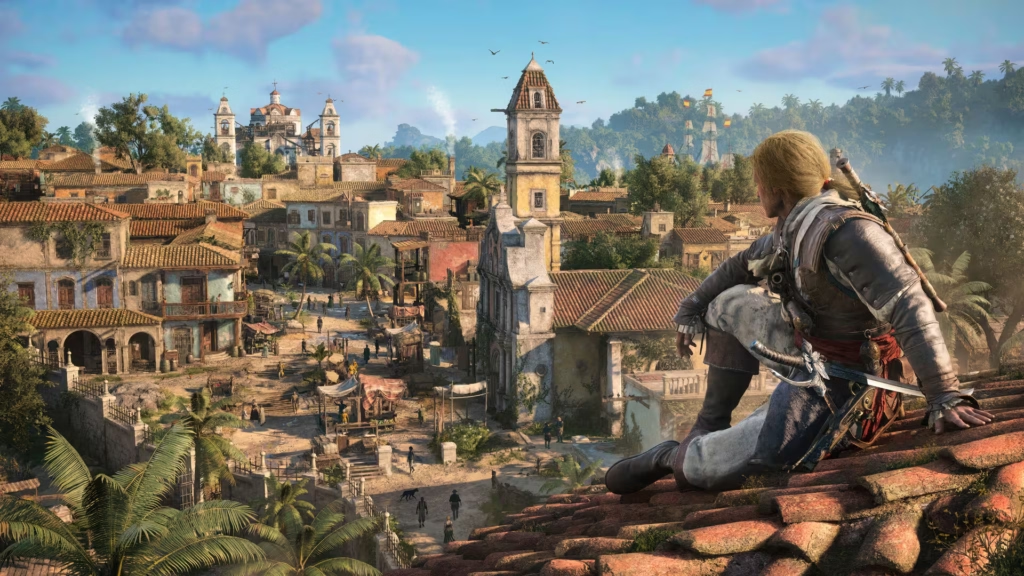
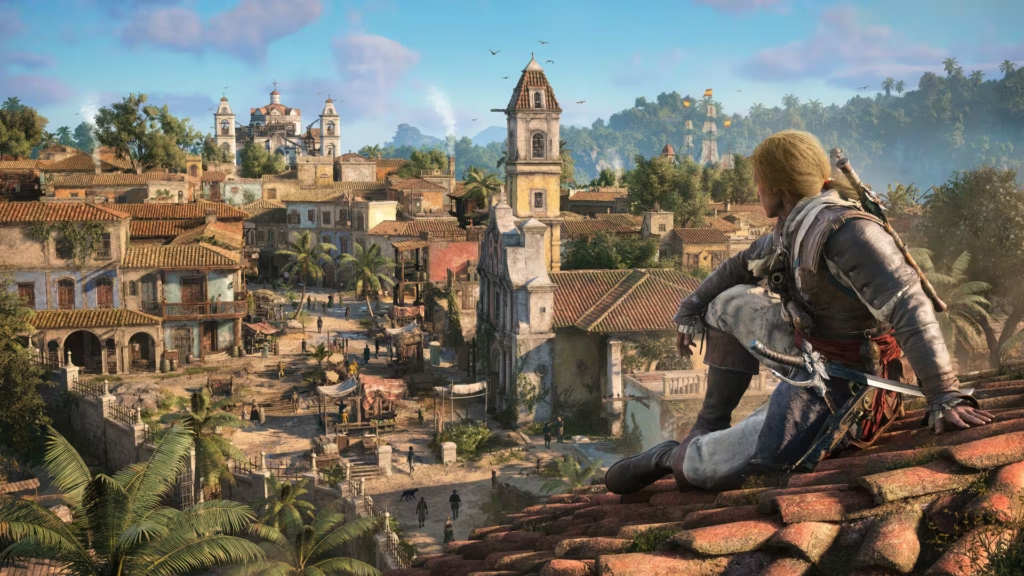
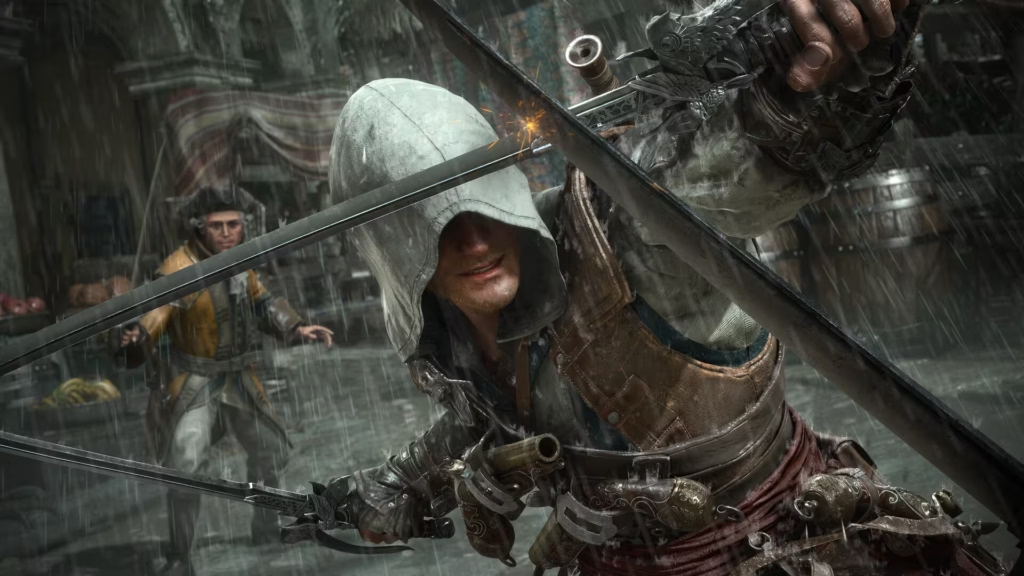
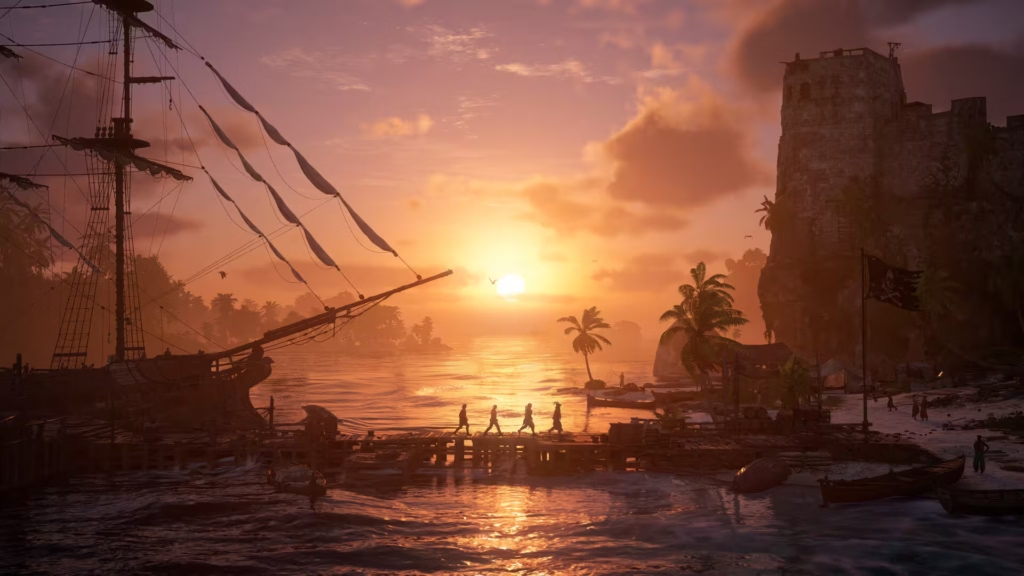
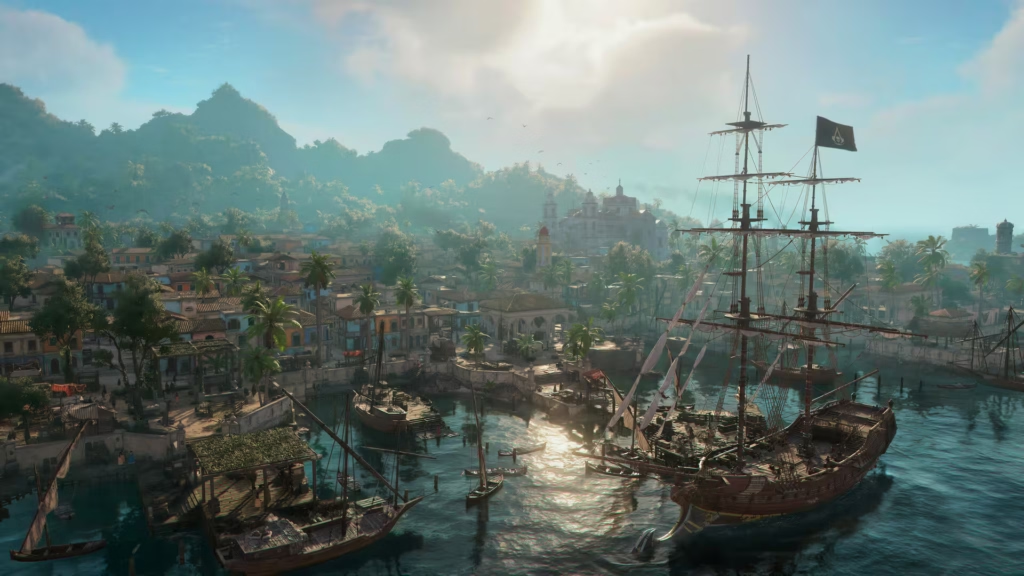
It certainly does pass the “this is what it looked like in my memory” test. The graphics immediately impress upon initial loading but it is only by comparing the remake directly with the original that it reveals what a drastic overhaul they have had. The detail has been multiplied several times over with more fidelity added to environments, foliage, textures, and cosmetics. There’s now a new and much more dynamic lighting and weather system to experience those fidelity improvements in. Notably animation during cut-scenes has been reworked, too.
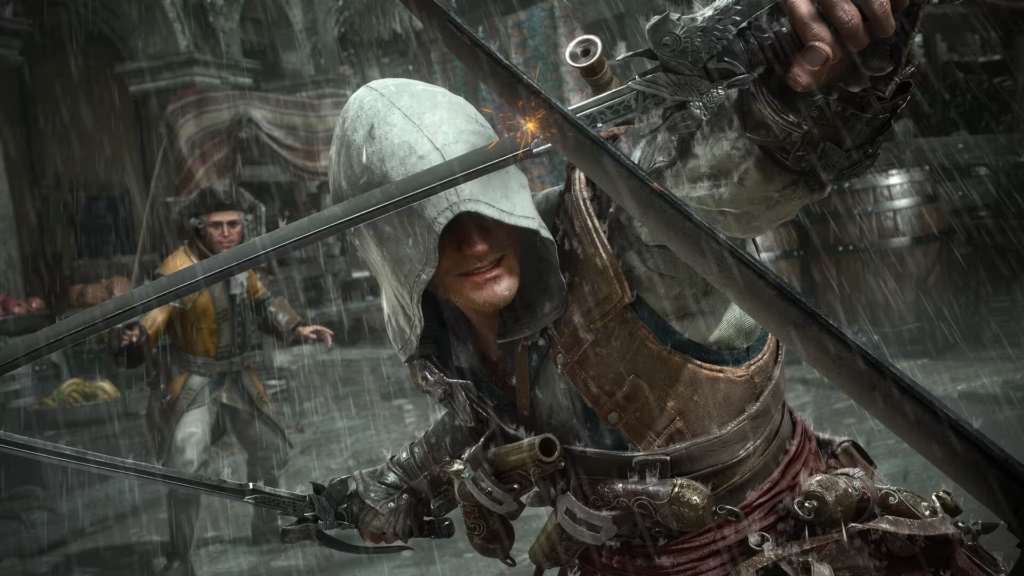
They do reutilise the mocap from the original Black Flag but are now given additional nuance and finesse, mostly across the board. “Mostly.” That’s said as it is still a big thorn in Ubisoft’s side that facial animation remains stiff and decidedly dated in-game, and while the graphics overall are a net improvement, no doubt, they could also be described as overclean, losing some mood of the original and even in some instances downgrading effects, like the rain at sea, which doesn’t convey quite as much drama.
Other changes in the remake include reworked stealth, reworked combat and naval mechanics, a higher level of customisation choice, a blended parkour system, additional officer recruitment missions, additional side quests and, critically, a re-address of instant fail states for minor infractions during the many tailing missions. Ubisoft has made some reductions, too, and, like the aforementioned future sequences, opted to remove the multiplayer mode and popular Freedom Cry DLC expansion. This may disappoint some fans of the original but is also an understandable decision to take in this day and age, and given the current financial position of the publisher.
This does, however, ultimately converge into a mixed bag of a product. On the one hand, for example, the combat system is greatly improved, allowing for more angles of approach and fluidity, more importantly, the ability to spartan kick enemies from great heights, but the camera hasn’t been considered enough in the translation to account for it. Almost every scuffle starts by conceding a cheap shot when engaging because the camera is in practice quite atrocious at keeping up with the action, which just isn’t possible to see coming.
The stealth mechanics, too, while reworked, seemingly by the addition of a crouch action, are overly rooted in the past. That’s not to say that those mechanics are not fun still but they also haven’t changed in any tangible way to keep up with modern standards, despite what the bullet points tells you. Enemy pathfinding and AI can still be duped in exactly the same way as it always has been, making approaching for a kill from a slightly perpendicular angle but still right in front of eyeline laughable. Perhaps, too, it was more of a parlour trick for player agency/interaction back in the early 2010s but the stashing bodies to be discreet and not raise alarm mechanic is almost totally redundant here and most likely was in retrospect.
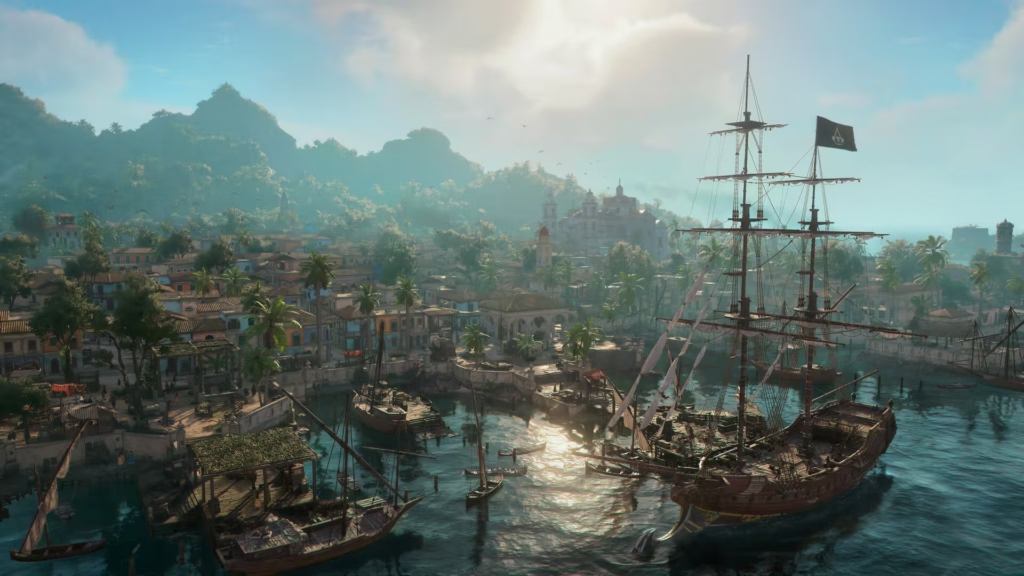
In tandem with some of these more questionable hangovers, other improvements are entirely welcome. The additional branching mission routes and player choice afforded by it; massively improved loading times; Kenway’s fleet, a ship-management metagame, now implemented directly into the main to make for an overall richer experience. Even ziplines for traversal have been added, which it’s hard to believe weren’t in 2013’s version of Black Flag.
Yes, to reiterate, it is a mixed bag of changes but given the choice between drastically altering (or should it be Altair-ing?!) elements and to risk alienating fans of the original or remaining faithful to the original vision, the lead developers at Ubisoft Singapore have mostly picked the latter. Despite the criticisms that a modern day lens casts upon Assassin’s Creed: Black Flag Resynced for being overly entrenched in the past, the decisions made for a restrained or conservative approach in most instances are generally to Black Flag’s benefit. The bottom line is the original game is good and all of its appeals still remain today and taking this approach to remaking it removes some of the friction that does exist in the original.
It’s easy to forget sometimes, when a new mechanic or gameplay loop is introduced in Assassin’s Creed: Black Flag Resynced, such as the harpoon fishing, one might think that it’s a new addition included just for the remake before realising that it was brought over practically wholesale from the original; so feature-packed it was for the time. Also, although Ubisoft has introduced some microtransaction shenanigans for premium rewards and additional objectives in its Animus Hub, they are far from egregious, leaving the main staples of Assassin’s Creed: Black Flag Resynced gameplay loop unhindered from most modern contrivances.
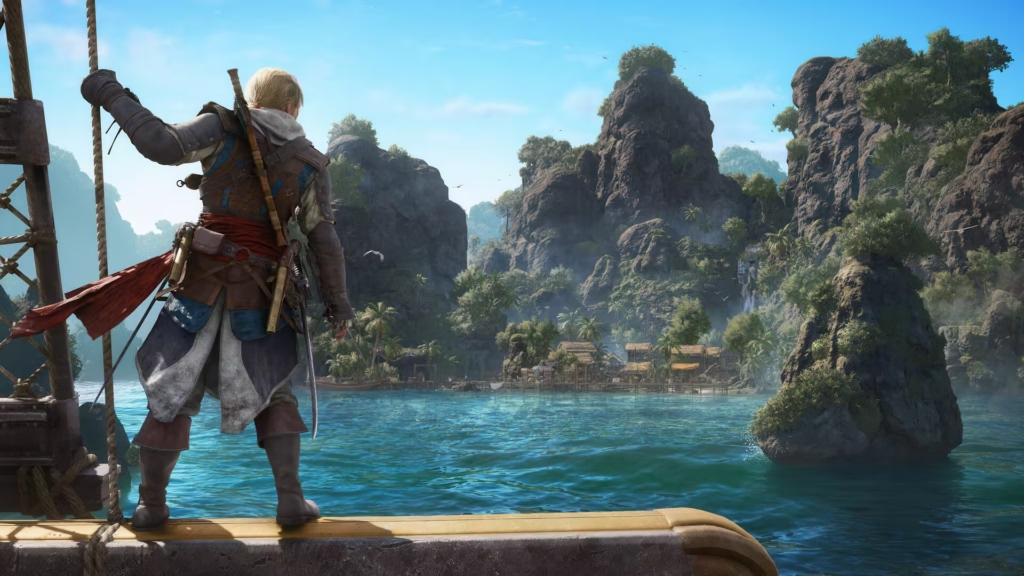
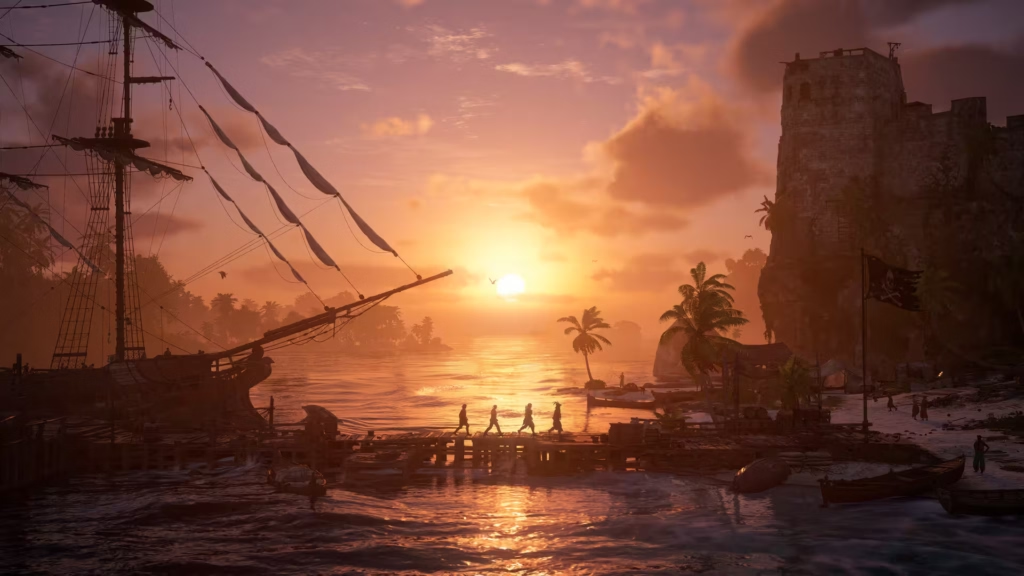
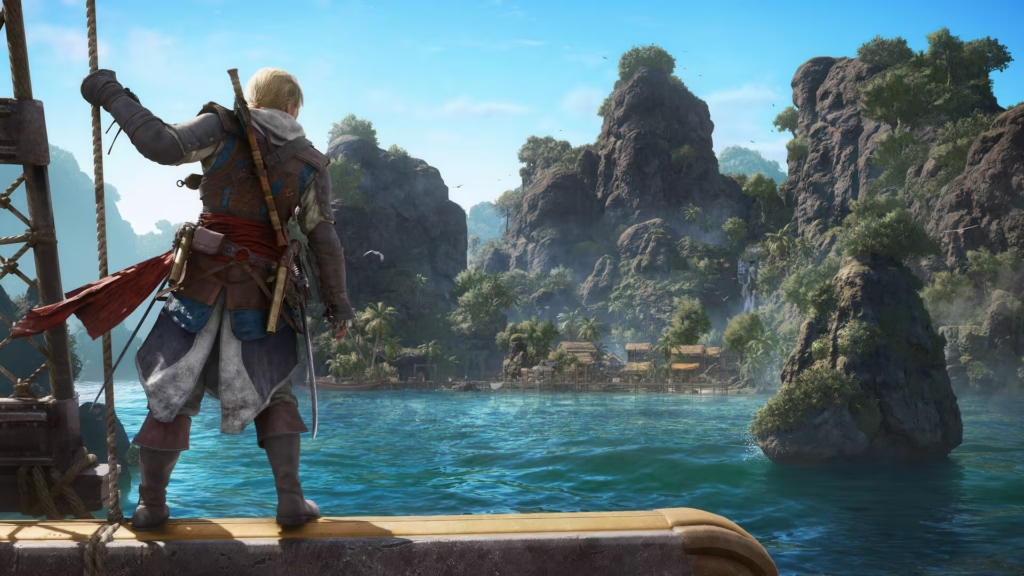
This goes for the progression, too, which, yes, it is an Ubisoft checkbox game at the end of the day but is pleasingly and refreshingly old-school. A return to a time before design bloat or time-wasting fluff. The focus is left on no element overstaying its welcome, as well as the narrative, the exploration of the Caribbean island, as well as upgrading the Jackdaw, Edward Kenway’s vessel, with the eventual goal of being able to take on the dreaded Man-O-Wars.
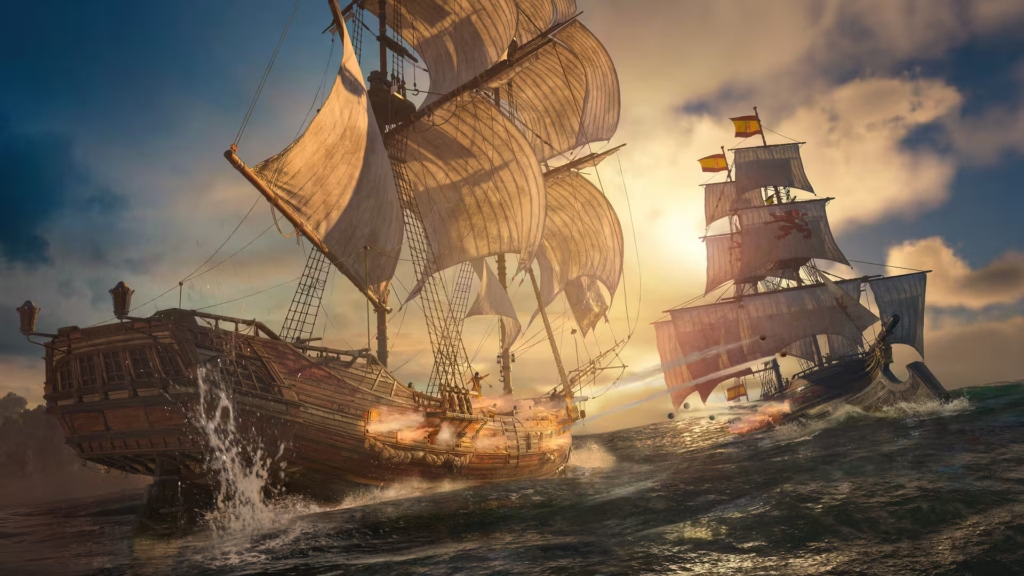
The pirate theme, too, in video games (despite having some classics in it like Monkey Island, Uncharted 4, Sea of Thieves, Like a Dragon: Pirate Yakuza in Hawaii) still hasn’t been taken out for walkies nearly enough over the years and neither has it been more impressive, open-ended and immersive as it is in Black Flag. Come on then, let’s all do it. Let’s do the thing together. On three… It makes you feel like Spider-Man. Sailing, plundering, diving for deep sea treasure, and getting into bar fights. The vibe can’t really be substituted for anything much else. Oh, and the sea shanties! The sea shanties are an absolute killer reward and exemplary feature that best any radio station you could get in Grand Theft Auto any day of the week. Worth the price of admission alone.


 Assassin’s Creed: Black Flag Resynced, for the uninitiated, is the modern remake of 2013’s Assassins Creed IV: Black Flag, now brought forward into the current generation on Ubisoft’s Anvil engine with an added lick of fresh ray-traced paint. It follows the story of Welshman Edward Kenway, in search of fortune and glory, set in the locale of the Caribbean islands during the golden age of piracy. Oh and, by the way, Edward is also existent within the ancestral memories of some dead guy from 2013, or thereabouts, reconstructed inside of a computer from a sample of their blood taken from the future. That guy’s name was Desmond. More about that later.
It’s refreshing that Edward starts his story as neither aligned to the Assassin’s Creed or the Templars, either of the secret organisations behind the shadow war which is the one only constant through-line in the Assassin’s Creed series, and is a war that is responsible for shaping or influencing much of human history and invention across the ages. Rather Edward Kenway approaches both factions with an irreverence, or skepticism one might say, and he is ultimately out for his own gain before it is only by luck, or perhaps misfortune, that he becomes embroiled in the struggle between the two factions. He’s a bit of a so-and-so, what someone might expect from a pirate but also an incredibly charismatic protagonist in a way that the Welsh aren’t often portrayed within media. A pirate though Kenway may be, he still has the moral fibre enough not to kill domesticated animals, which is good to know, lest a time paradox, or desynchronisation, be created. He is supported by a cast of memorable side characters keeping the plot engaging throughout Assassin’s Creed: Black Flag Resynced.
On the subject of time paradoxes, let’s get back to that one. Is it too soon in this review to mention the future timeline? Assassin’s Creed is really, as alluded to, actually set around 2013, under the corporate memory decoding remit of the probably evil conglomerate, Abstergo Industries. If the subject was to be brought up, then the possibility that it could potentially confuse a casual mass mainstream audience is high. It may put them right off their breakfast! Ubisoft seems to agree with this sentiment as the future timeline segments in Assassin’s Creed: Black Flag Resynced, following in the suit of more recent entries in the series, have taken even more of a backseat in this remake. This, being one of its narrative or structural digressions from the original title, is a shame.
 These sections have admittedly had a mixed response over the years by players but it is mainly because Ubisoft had appeared to lose interest and/or wasn’t sure what to do with them to make them fit. Whichever side one’s opinion lands on these sections, they do go a long way a-ways toward defining the franchise in a way that becomes a bit more blurry and non-descript without them being as integral as they once were. Worse still is the massive chasm left by the absence of Yes Man Danny Wallace’s and Yes Woman Kristen Bell’s roles, which, even though one of them is also canonically dead by this point in the series, could be argued are the glue keeping the many convoluted worlds and the overarching concept of Assassin’s Creed propped together.
Assassin’s Creed: Black Flag Resynced’s biggest problem really is what it represents, and the irony therein, of being remade in 2026. Although the first few games in the series felt, at the time, truly next-gen on PS3 and Xbox 360 (with advanced inverse kinetics, parkour mechanics, and massive, collectathon, climb the tall thing to reveal the map open-worlds), once it was time for Assassin’s Creed IV: Black Flag to roll down the barrel, there was already discussion around franchise fatigue, what with Ubisoft’s aggressive annualisation of the series after its initial popularity.
Assassin’s Creed IV: Black Flag on release, however, far defied those expectations. Its seafaring structure and a bold, ambitious scope were celebrated, making it an immediate fan favourite. It stood as a total reinvention and reinvigoration for the franchise. While the original title was considered a big step forward, then, (excuse the pun) sailing the uncharted waters of the 2010’s game industry, a remake of it in 2026 feels more like a look back. Even more so, cynically, an attempt to get an easy win recapturing some nostalgia and goodwill from a time when the road ahead didn’t look quite as rocky. (Note: You’ve been spared for another nautical pun that could have gone in there!)
 It’s also not like Assassin’s Creed IV: Black Flag is even that old or even aged badly. It came out cross-platform at the end of the PS3 and start of the PS4 lifecycle and, you know, still looks pretty good. It is still very much playable on current gen hardware. Although perhaps due to worldwide pandemics or titles like vanilla Grand Theft Auto V being released at around the same time, yet still lingering on that it has shifted the collective perception of time… but it really doesn’t feel like that long ago.
With that, returning to the Caribbean islands in this remake is a sense that not much has changed because not enough time has passed for it to substantially change. It has this weird déjà vu quality that feels like one might be dreaming of replaying the original title. Even though that sort of is the case. Indeed, this is the eternal question brought up for the subject of remakes (a whole other debate in itself. Essays on the Final Fantasy VII Remake are out there) of what to change, how drastic to do so, and conversely what retain, hold on to or preserve. Of course, it’s a cliché to say that when one A/Bs the original game with Assassin’s Creed: Black Flag Resynced the differences do become far more blatant, but on first blush one might be forgiven for mistaking this remake for being a really good remaster.
It certainly does pass the “this is what it looked like in my memory” test. The graphics immediately impress upon initial loading but it is only by comparing the remake directly with the original that it reveals what a drastic overhaul they have had. The detail has been multiplied several times over with more fidelity added to environments, foliage, textures, and cosmetics. There’s now a new and much more dynamic lighting and weather system to experience those fidelity improvements in. Notably animation during cut-scenes has been reworked, too.
They do reutilise the mocap from the original Black Flag but are now given additional nuance and finesse, mostly across the board. “Mostly.” That’s said as it is still a big thorn in Ubisoft’s side that facial animation remains stiff and decidedly dated in-game, and while the graphics overall are a net improvement, no doubt, they could also be described as overclean, losing some mood of the original and even in some instances downgrading effects, like the rain at sea, which doesn’t convey quite as much drama.
 Other changes in the remake include reworked stealth, reworked combat and naval mechanics, a higher level of customisation choice, a blended parkour system, additional officer recruitment missions, additional side quests and, critically, a re-address of instant fail states for minor infractions during the many tailing missions. Ubisoft has made some reductions, too, and, like the aforementioned future sequences, opted to remove the multiplayer mode and popular Freedom Cry DLC expansion. This may disappoint some fans of the original but is also an understandable decision to take in this day and age, and given the current financial position of the publisher.
This does, however, ultimately converge into a mixed bag of a product. On the one hand, for example, the combat system is greatly improved, allowing for more angles of approach and fluidity, more importantly, the ability to spartan kick enemies from great heights, but the camera hasn’t been considered enough in the translation to account for it. Almost every scuffle starts by conceding a cheap shot when engaging because the camera is in practice quite atrocious at keeping up with the action, which just isn’t possible to see coming.
The stealth mechanics, too, while reworked, seemingly by the addition of a crouch action, are overly rooted in the past. That’s not to say that those mechanics are not fun still but they also haven’t changed in any tangible way to keep up with modern standards, despite what the bullet points tells you. Enemy pathfinding and AI can still be duped in exactly the same way as it always has been, making approaching for a kill from a slightly perpendicular angle but still right in front of eyeline laughable. Perhaps, too, it was more of a parlour trick for player agency/interaction back in the early 2010s but the stashing bodies to be discreet and not raise alarm mechanic is almost totally redundant here and most likely was in retrospect.
 In tandem with some of these more questionable hangovers, other improvements are entirely welcome. The additional branching mission routes and player choice afforded by it; massively improved loading times; Kenway’s fleet, a ship-management metagame, now implemented directly into the main to make for an overall richer experience. Even ziplines for traversal have been added, which it’s hard to believe weren’t in 2013’s version of Black Flag.
Yes, to reiterate, it is a mixed bag of changes but given the choice between drastically altering (or should it be Altair-ing?!) elements and to risk alienating fans of the original or remaining faithful to the original vision, the lead developers at Ubisoft Singapore have mostly picked the latter. Despite the criticisms that a modern day lens casts upon Assassin’s Creed: Black Flag Resynced for being overly entrenched in the past, the decisions made for a restrained or conservative approach in most instances are generally to Black Flag’s benefit. The bottom line is the original game is good and all of its appeals still remain today and taking this approach to remaking it removes some of the friction that does exist in the original.
It’s easy to forget sometimes, when a new mechanic or gameplay loop is introduced in Assassin’s Creed: Black Flag Resynced, such as the harpoon fishing, one might think that it’s a new addition included just for the remake before realising that it was brought over practically wholesale from the original; so feature-packed it was for the time. Also, although Ubisoft has introduced some microtransaction shenanigans for premium rewards and additional objectives in its Animus Hub, they are far from egregious, leaving the main staples of Assassin’s Creed: Black Flag Resynced gameplay loop unhindered from most modern contrivances.
 This goes for the progression, too, which, yes, it is an Ubisoft checkbox game at the end of the day but is pleasingly and refreshingly old-school. A return to a time before design bloat or time-wasting fluff. The focus is left on no element overstaying its welcome, as well as the narrative, the exploration of the Caribbean island, as well as upgrading the Jackdaw, Edward Kenway’s vessel, with the eventual goal of being able to take on the dreaded Man-O-Wars.
The pirate theme, too, in video games (despite having some classics in it like Monkey Island, Uncharted 4, Sea of Thieves, Like a Dragon: Pirate Yakuza in Hawaii) still hasn’t been taken out for walkies nearly enough over the years and neither has it been more impressive, open-ended and immersive as it is in Black Flag. Come on then, let’s all do it. Let’s do the thing together. On three… It makes you feel like Spider-Man. Sailing, plundering, diving for deep sea treasure, and getting into bar fights. The vibe can’t really be substituted for anything much else. Oh, and the sea shanties! The sea shanties are an absolute killer reward and exemplary feature that best any radio station you could get in Grand Theft Auto any day of the week. Worth the price of admission alone.

Comments (0)
Be the first to comment!
Leave a comment as a guest