
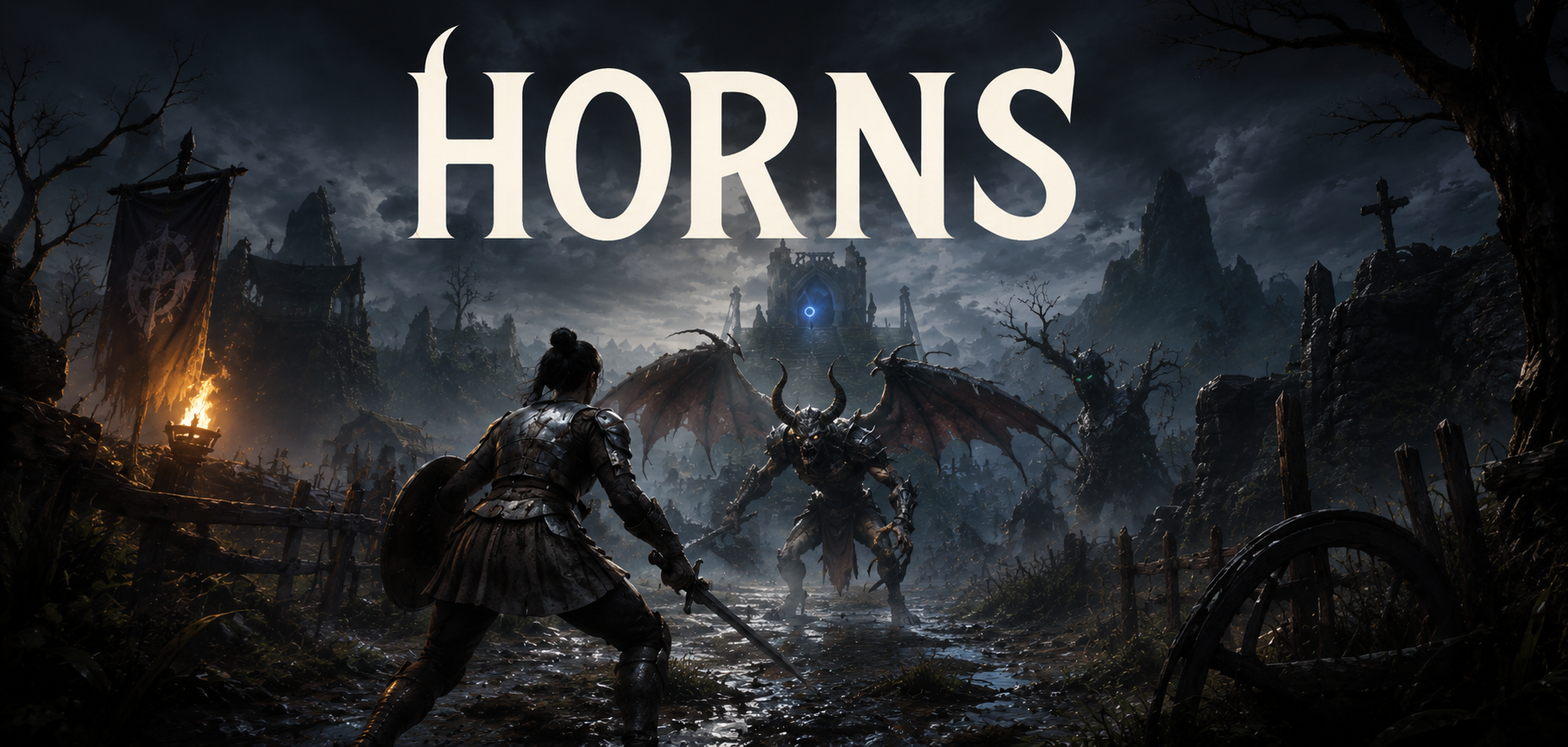
promising a combination of the atmosphere of classic late-'90s and early-2000s RPGs with a modern, souls-like inspired combat system. Behind the project is Radoš Nikolić and his Jiggsaw Studio — a solo developer from Aleksinac who has spent recent years living and working in Kraljevo and Belgrade. We talked to him about the game's development, inspirations, technical challenges, and launch plans.
Background / about the developer
InsertCoin: Are you working on Horns alone, or do you have a team?
Radoš Nikolić: I started working on Horns alone, and to this day I'm still the one working on the game. But I've had help with certain parts of development. Several talented people have helped me over the past few months, so Horns now has an original soundtrack, a number of graphical assets, and 2 voice actors. I also reconnected with an old schoolmate who's also a programmer and who liked the project, so he's been helping me a lot and speeding up development.
InsertCoin: You're from Aleksinac — what does game development from a smaller town in Serbia look like? Is there any kind of scene, neighbors or friends working on similar things, or have you been working pretty much in isolation?
Radoš Nikolić: I lived and worked as a programmer in Kraljevo for a long time (7 years), then moved to work and live in Belgrade (2 years). I was born in Aleksinac (my hometown), and I can say I've worked in isolation. I develop Horns in my free time — and then some — considering I have three young children and a full-time job as a programmer.
InsertCoin: What led you to game development — what was your experience before Horns, and are you formally trained for this or self-taught?
Radoš Nikolić: I've been a professional programmer for 14 years, but as a web developer. I'm not from the gaming industry and had never worked on video game development before. However, I have a solid grasp of object-oriented programming, which helped a lot in developing the game. I'm generally someone who learns fast and is curious about technology, so the only thing I really had to learn was the engine — that took about 4 months of constant work before I felt ready to actually start on the game. Of course, the learning never really stops, even now.
InsertCoin: Does Horns carry any trace of your background — visually, thematically, or even in the names/lore — something inspired by where you come from?
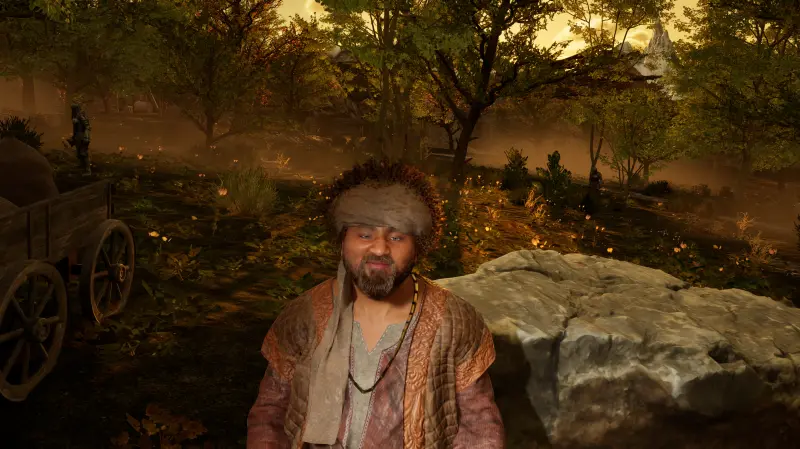
Radoš Nikolić: Yes. The characters in Horns are inspired by people from my own life. After carefully choosing who to ask, a few friends agreed to let me use their likeness for the game, so I modeled them and used their visual appearance for characters in the game. Beyond the visuals, there's also a lot of similarity between the characters' personalities in Horns and the personalities of people from my real life and surroundings.
Concept and inspiration
InsertCoin: Horns blends the atmosphere of classic late-'90s and early-2000s RPGs with a modern souls-like combat system — which games were the biggest reference points for you?
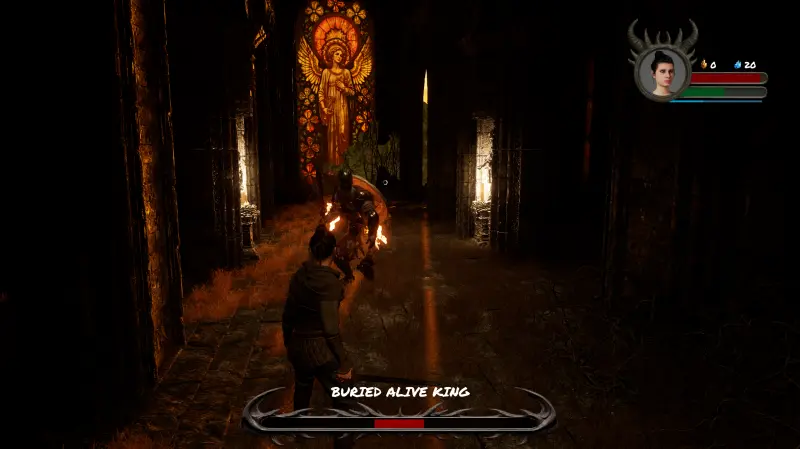
Radoš Nikolić: I'm a huge gamer. I've been playing video games since 1993 and have followed every console and computer generation up to today. Horns carries elements of some of my favorite games — you can spot the influence of Max Payne 1, Resident Evil 1, Morrowind, Dark Souls, and Death Stranding. Even though these aren't RPGs themselves, everything is nicely wrapped into RPG gameplay and story. What I mostly borrowed were certain mechanics from those games, elevated to a higher — or let's say different — level from the originals, so that part of the game would gain its own authenticity.
InsertCoin: The story follows a character searching for Lord Egannon and questioning who the "real monster" is — where did the idea for that moral ambiguity come from?
Radoš Nikolić: Lord Egannon is one of the key figures in the game and one of the most mysterious characters in the world of Velharion. I wouldn't want to say too much about him, because I'd like players to sink into the mystery of that character and try to uncover the details of his existence and role in the overall story themselves.
InsertCoin: The name "Horns" and the mechanic where evil literally grows from the player's body — how did you arrive at that visual/narrative metaphor?
Radoš Nikolić: Horns is based on a novel of the same name that I wrote about 3 years ago. Horns, as a symbol, generally represent evil and the devil — and that holds true in the story of Horns as well, where horns embody evil and dark power, which in my story is a trait of the Arcanist people. The connection between horns and Arcanists is magic, which — both in stories and in real life, when mentioned — symbolizes something demonic and supernatural. As far as the game's story goes, this symbolism is deepened a bit further to add mystery and a thriller-like effect, which I hope players will enjoy.
Gameplay and mechanics
InsertCoin: The Nyxar Realm mechanic, where the world slows down while the player moves freely — how does that work in practice, and how do you avoid it breaking combat balance?
Radoš Nikolić: Nyxar is one of the key powers in the game — not just as a tactical ability for players, but also as an element that ties the story together. The power is well balanced in terms of duration, how it recharges, and enemy difficulty. On the gameplay side, Nyxar gives players the ability to slip away from a hotspot unnoticed, or the ability to damage an enemy and gain an advantage in combat.
InsertCoin: The "Hourstride" phenomenon, where the night becomes more dangerous — does that affect exploration, combat, or both, and how tightly are those two systems connected?
Radoš Nikolić: I think exploration and combat are closely linked, at least in Horns. You'll rarely find areas that are "clean" — there's almost always someone in your way who wants your head. Hourstride is a phenomenon of the world of Velharion that will definitely make playing at night harder, which gives the game another dimension. Night doesn't last long in Horns, but during it, players will have to plan their movement carefully and pay attention to who they attack. Night will push players to hide if they're not strong enough to fight — and that's exactly the dimension I wanted to add: forced stealth. Velharion has hiding spots, like hay piles found in several places on the map, where the player can duck in to stay unnoticed. Nyxar can also play a good role here — the player can enter the Nyxar middle-realm and avoid stronger enemies during the night. That's precisely the tactical element players will have to shape and plan for themselves.
InsertCoin: Players can choose to be a warrior, an arcanist, or a "horn master" — how build-based is that, and how much is it purely a stylistic choice with no mechanical consequences?
Radoš Nikolić: There are three defined builds possible in Horns, plus a fourth I'd call the "mixed build." Build choice matters and is focused — if you want to be an Arcanist, you'll rely on magic and focus on boosting 2-3 attributes tied to spells. In that case, you'll ignore attributes and weapons tied to melee combat. Gear-wise, you'll be chasing items and artifacts that boost your magical powers. You'll also pay attention to wearing armor and helmets oriented toward arcanists, to further boost magic-related attributes. The same applies to the warrior and horn-master builds.
The mixed build boosts all attributes roughly equally — so you're not oriented toward magic, combat, or horns specifically, but want to use everything in combat. In this build you won't become a master of magic, combat, or horns, but you'll be able to combine melee combat with certain spells, and sometimes even horn powers.
InsertCoin: Weapon and shield durability, limited resources — how do you balance that so the game feels challenging rather than frustrating?
Radoš Nikolić: The original idea was for the game to feel realistic, primarily in terms of movement and weapons. The idea that weapons have durability and can get damaged opens up another dimension in the game, where the player has to look after their gear, search for items used for weapon repair, and trade with merchants or blacksmiths who can repair weapons or sell repair tools. There are also spots where the player can repair their own weapons without spending any money.
This mechanic is well balanced because there are plenty of sources for weapon repair. Even when a weapon gets damaged, the player can still use it, but the damage it deals is reduced. Some weapons can break entirely if used while damaged, meaning you lose them permanently.
Horns offers plenty of weapons, as well as weapon upgrades, so players don't need to worry about ending up empty-handed.
InsertCoin: One-strike finish moves — how did you design those moments to feel satisfying without turning combat into pure "spam" mechanics?
Radoš Nikolić: The One-Strike Finish is really just a visual effect in the game — as you said, a satisfying moment for players. Not every enemy can be finished this way, only those that are more or less "standard" for that part of the map. The finisher triggers automatically, generally when the enemy is below 50% health and you're at the right distance from them when you land the hit. So you still have to fight and prove your skill in the game either way.
World and exploration
InsertCoin: There's no map guiding the player by the hand — how conscious a risk was that, given how much players today expect guidance, and how do you compensate through level design?
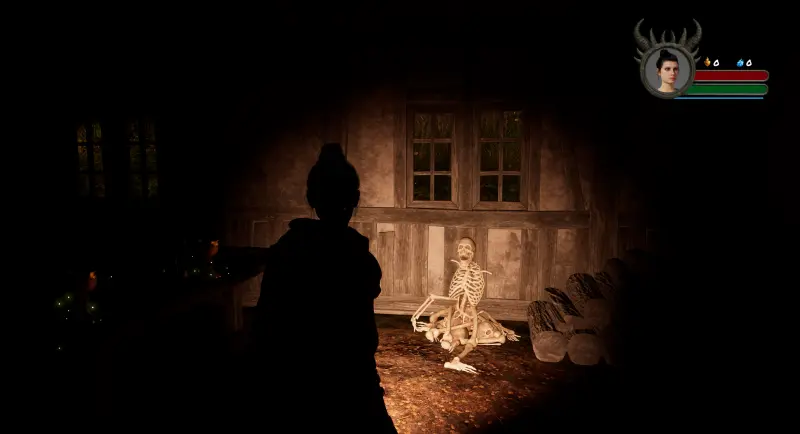
Radoš Nikolić: I'm a '90s gamer — back then, games didn't have mechanics that led you by the hand. In my opinion, the joy of playing comes from figuring things out yourself — how something works, solving a puzzle on your own, exploring the world, and so on. That's the real satisfaction of playing, isn't it? I'm aware that today's players expect the game to guide them, and I consciously chose this approach because I want playing Horns to be an experience where you sink into the world and do your best to get to know it. There's no map, but there are other indicators and guides in a sense... You have signs along the road, quests that will guide you, items called StoryNotes that reveal the story but also hide important information for navigating the game. I think players will enjoy this approach, and I'm confident they won't feel lost because of these mechanics.
InsertCoin: The world of Velharion and its rulers as boss encounters — can you give us a hint about how these bosses are thematically tied to the story?
Radoš Nikolić: Every ruler, boss, or NPC is closely tied to the story. When we talk about boss characters, they all have their own story and role in Velharion, whether in the present or the past. All of that is nicely explained through the game, and I think players just need to make progress to see how the pieces of the story fit together.
Technical and production side
InsertCoin: What engine and tools are behind Horns, and what was the biggest technical challenge in development?
Radoš Nikolić: Horns is built in Unreal Engine using C++. I'd say the biggest challenge was optimization — making a visually strong game while still allowing it to run on weaker computers. That's definitely been the hardest part of the process, at least for me.
InsertCoin: The system requirements are fairly demanding for an indie title (16GB RAM, RTX 3060 recommended) — what does that say about the visual ambition of the game?
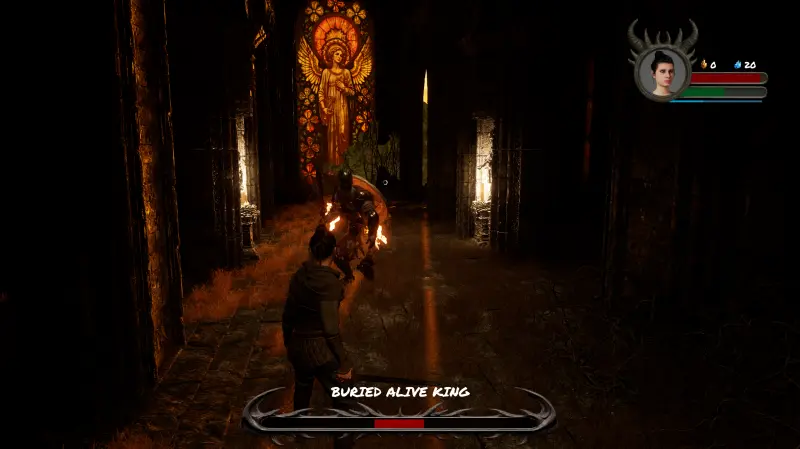
Radoš Nikolić: The game is built and focused to feel like an AA or even AAA title. The visual side of the game is a major focus, and it's something I've put a lot of work into. Realistic graphics, movement, animations... that's something I personally love in games, and I'm making Horns primarily to my own taste. Big steps have been taken with optimization — Horns has been tested on a GTX 1060 from 2016, and the game ran almost at full HIGH settings, which matters a lot to me and this project. To make sure players with weaker computers can still play, Horns offers preset graphics on LOW, MEDIUM, and HIGH, and the most important detail is custom graphics settings in the menu, where I've left plenty of options to gradually reduce specific details and tailor the game to look as good as possible even on a weaker or older machine.
InsertCoin: How long has the game been in development so far, and how much work went into the demo that's already available?
Radoš Nikolić: The game has been in development for almost 2 full years now. The demo was released about 2 months ago and has received several updates, with version 0.6.0 — released a few days ago — being the latest update for the demo. However, development has gone well beyond the demo, and at this point around 60-70% of the game is finished.
Publishing and the future
InsertCoin: You're both the developer and the publisher — what's that experience like, and are you considering partnering with a publisher before launch?
Radoš Nikolić: Yes, I'm on my own in both development and promotion. I make the promo videos myself, run the social media, and try to show up everywhere I can. That said, I've realized I'm not really the right person for marketing, so about a month ago I started working with an American PR agency, and I'm hoping they'll do a good job on the promotional side. Publishers aren't really an option at this point — so I'll be releasing the game as solo developer Radoš Nikolić.
InsertCoin: What can players expect from the demo compared to the final game?
Radoš Nikolić: The demo is meant to give players a taste of the game — to introduce them to Velharion, to the mechanics, the atmosphere... The demo offers about an hour to an hour and a half of gameplay, depending on the player's skill and how much they want to explore. Technically, you can finish the demo in about 30 minutes if you complete two quests and find the exit. If you want to explore every area in the demo, it can take up to an hour and a half.
The full game will offer 25-30 hours of gameplay. Players will keep being "surprised" as they progress — learning new spells and skills, exploring new areas, meeting new characters, and uncovering the mystery of Velharion, as well as of the main heroine.
InsertCoin: What's your biggest fear, and your biggest hope, about launching in Q4 2026?
Radoš Nikolić: The launch is planned for Q4, and the game will be finished on time. However, in agreement with the PR agency, and because of some long-awaited titles coming out during that same period, there's a good chance we'll push the Horns launch to February or March 2027. Expectations are high, because I believe I have a quality, interesting game — I'll be offering close to 30 hours of gameplay, and the price will be very affordable and accessible to everyone. My biggest fear is that the game won't succeed or will get bad reviews, which would honestly be devastating for me. A lot of time, effort, and money has gone into this project. As you know, I've pushed through and financed all of it myself, and I hope players will recognize the quality in the game itself.
InsertCoin: What would you say to players who have been following Horns' development from the very start?
Radoš Nikolić: To those who've been following development or played the early demo versions of Horns, I'd recommend downloading the latest update/version — 0.6.0 (you can see the version in the main menu) — and playing through it again. The game has gone through a lot of gameplay changes since the first demo version, all thanks to feedback from players and friends. Plenty of new content has been added in terms of gameplay mechanics, items, areas to explore, graphical optimization, sounds, effects, and more. Of course, a lot of bugs have also been fixed, so this latest demo version genuinely looks and feels different from the previous ones.

Comments (0)
Be the first to comment!
Leave a comment as a guest