
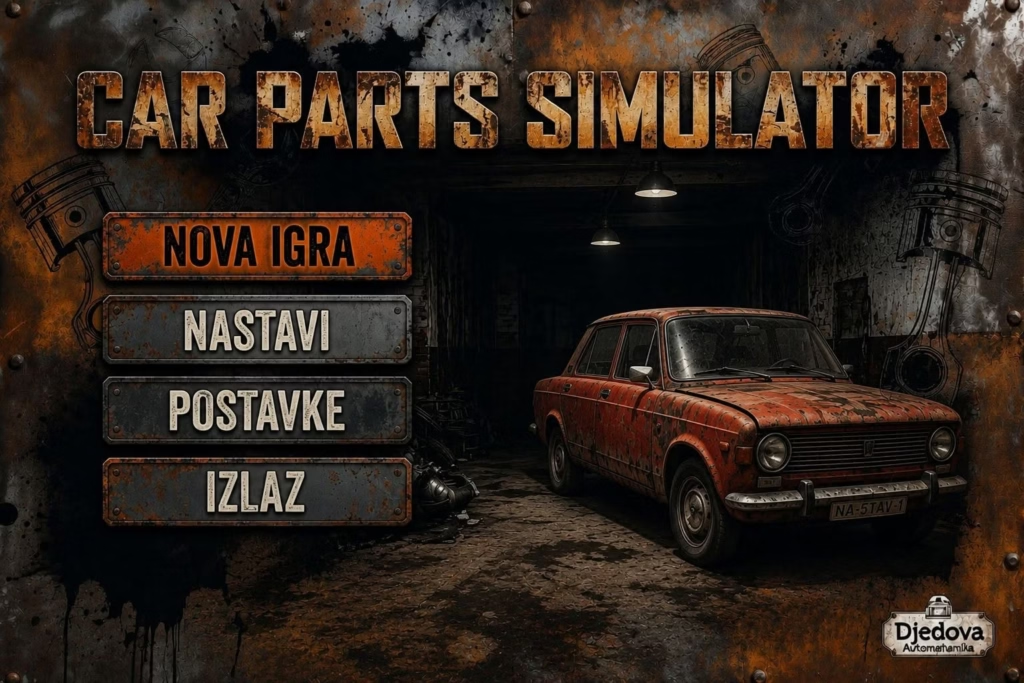
Car Parts Simulator trades the usual arcade repair loop for something closer to a survival story about hustling, trading, and rebuilding a legacy. Behind it is a solo developer working under the studio name Djedova Automehanika, who set out to capture a very specific memory: the smell of oil and old machinery, and the mentality that nothing gets thrown away, only fixed and resold until it works again. We sat down to talk about the game's story, its risk-based trading system, and what it's like learning Unity from zero while building your first serious project.
InsertCoin: Before we get into specifics, how would you describe the core loop of Car Parts Simulator to someone who's played other business sims?
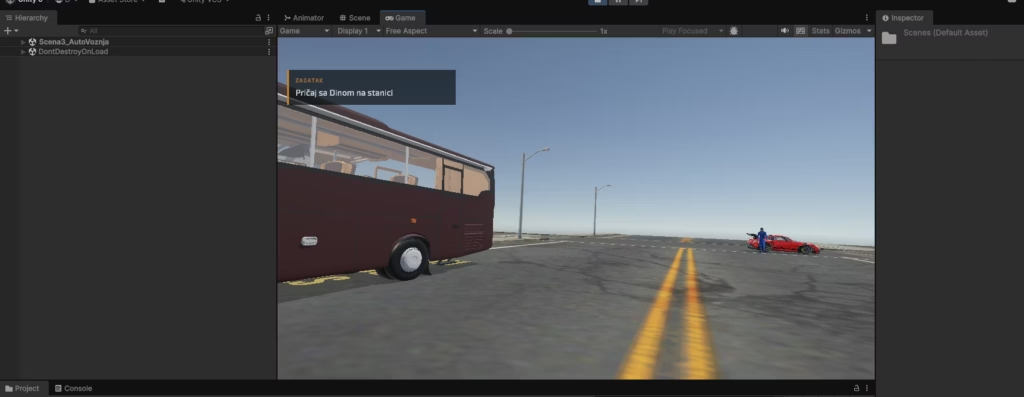
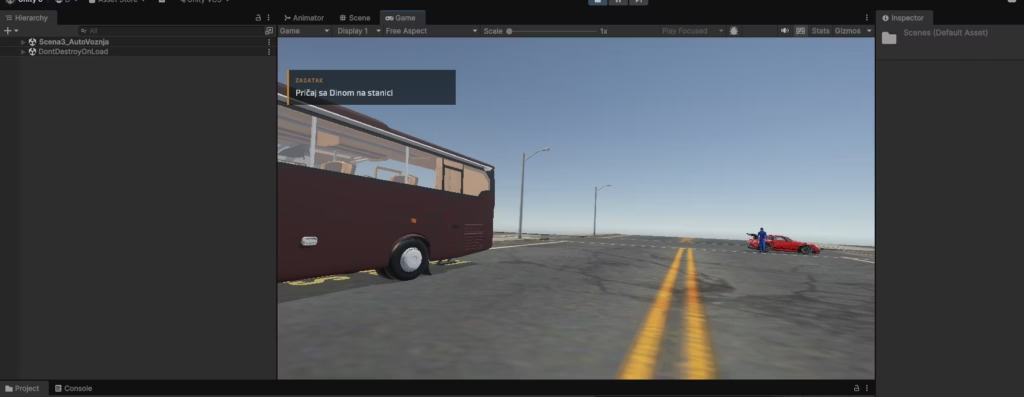
Djedova Automehanika: This isn't a typical simulator where you're dropped straight into a shop, ordering stock, setting prices, selling, and upgrading on repeat. I wanted this one to have an actual story behind it. The player starts out in their apartment, wanting to travel to the city where their grandfather once lived and revive his old business. That's why the intro alone runs through six scenes: the player leaves the apartment, heads to the bus station, leaves their hometown behind, watches it disappear from the bus window, and finally arrives in a new city where their friend Dino is waiting. After a short conversation and a coffee stop, Dino drops them off in front of their grandfather's old workshop, and that's where the open-world map opens up completely.
On day one, the player walks into the workshop, cleans it up a little, and orders the first batch of parts. By day two, they can already head to the junkyard, pick up a part for 20 KM, and try to flip it for 200 KM, but only after cleaning off the rust first. Once it's cleaned, it looks 100% flawless, but under the surface it might still only be 50–70% functional. The player has no way of knowing that, which means there's always a risk a customer comes back a few days later demanding a refund. There's also romance, loss, mystery, and a hidden project tied to the grandfather woven through it. If I manage to tie all of that together properly, I think this could turn into something really special. Right now the focus is on nailing the mechanics first, with graphics polish and bug fixes coming after.
The story takes place across the Balkans, travelling from Sarajevo to Tuzla, with the workshop itself located in Tuzla.
Background and Idea
InsertCoin: Where did the idea for Car Parts Simulator come from? Is this a personal story, a memory of someone's garage, or more of a general homage to Balkan car-mechanic culture?
Djedova Automehanika: It's a bit of everything. Anyone from the Balkans carries that memory of the smell of the pit, the oil, the old machines, and that iconic mentality where nothing gets thrown away, it gets patched and resold until it runs again. I wanted to bring that authentic atmosphere into the game, the real Balkan spirit that everyone from this region instantly recognises.
InsertCoin: The studio is called "Djedova Automehanika" ["Grandfather's Auto Mechanics"]. Is there a real story behind that name, maybe someone's actual grandfather and his workshop?
Djedova Automehanika: The name carries a bit of that shared family nostalgia we all have. Almost everyone had a grandfather, uncle, or neighbour whose garage you'd hang around as a kid, messing around by the pit, handing over tools, learning the ropes. "Djedova Automehanika" is a tribute to all those old-school mechanics who could work miracles out of nothing.
InsertCoin: Are you working on this solo, or is there a team involved?
Djedova Automehanika: I'm developing this entirely on my own. Programming, UI design, the story, gameplay mechanics, scene assembly, all of it is on me. What tends to surprise people is that I had zero experience with Unity before starting this project. Car Parts Simulator is my first serious Unity build, and everything you see today is the result of daily learning, experimenting, and just refusing to quit. Every problem I managed to solve felt like a step forward, and honestly that process is what keeps me motivated. A lot of the English-language tutorials on YouTube are either too complex or outdated for newer Unity versions, so a lot of it came down to sitting down, digging through the code, and piecing things together until they worked.
About the Game
InsertCoin: The game blends repairing, buying, selling, and negotiating with suppliers. Why was it important that this feel like a real business sim rather than an arcade-style repair game?
Djedova Automehanika: I wanted to focus on the actual core of Balkan business culture: trading, hustling, and reselling car parts. There's no classic "full vehicle repair in the pit" mechanic here. The emphasis is on sourcing stock, haggling, managing inventory, and reselling. Players need to think like an actual trader if they want to survive and turn a profit.
InsertCoin: You've mentioned 500+ types of car parts and 30+ classic vehicles. What does that process look like? Are you modelling real Balkan cars like the Lada, Zastava, or Yugo?
Djedova Automehanika: Those numbers aren't final yet since the game is still actively in development. My focus wasn't on maximising the vehicle count, but on making sure every part actually serves a purpose in the gameplay. I'm drawing inspiration from the cars that defined the region, Lada, Zastava, Yugo, but the bigger emphasis is on the trading and risk system. Parts bought at the junkyard can look great on the outside while being worn out or faulty underneath, and the player only feels the consequences of that days later, when the customer walks back through the door.
InsertCoin: How important is authenticity, garage sounds, realistic junkyard prices, in nailing that Balkan atmosphere?
Djedova Automehanika: Authenticity matters a lot to me. I didn't want to build another simulator where everything boils down to buying and selling. In Car Parts Simulator, every business decision carries some level of risk. Sell a part that isn't fully sound, and the customer might come back a few days later demanding their money back. At that point the player has to decide: protect their reputation, or try to hold onto the profit. Moments like that are what give the game its identity and set it apart from typical simulators.
InsertCoin: The game is built in Unity. Why did you go with Unity for this project specifically?
Djedova Automehanika: Unity was my choice mainly because it's popular and flexible, even though, as I mentioned, I learned it completely from scratch through this project. It let me visually piece together every stage of the game, even though early on I was wrestling with basically every line of code before things started clicking.
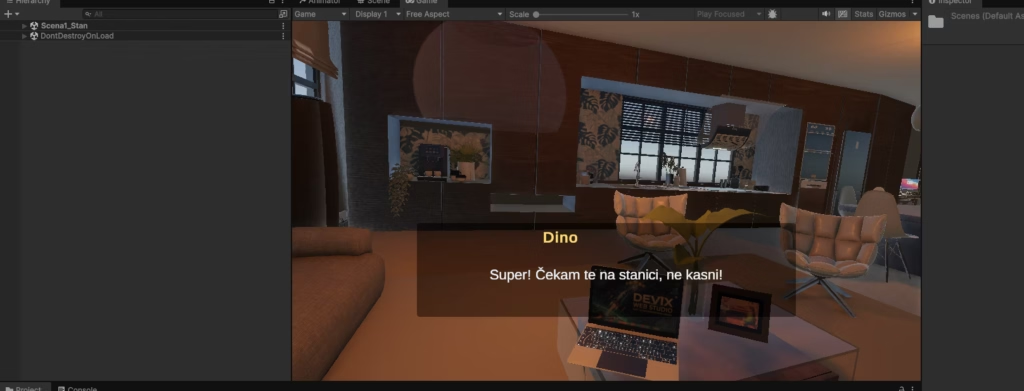
InsertCoin: In one scene we see the main character boarding a bus, and in another a modern apartment with a laptop showing "Devix Web Studio" on screen. Can you tell us more about the story? Does the protagonist come from the city to take over their grandfather's workshop?
Djedova Automehanika: Exactly, you've hit the core of it. The story opens in a modern apartment, where the main character gets a call from their friend Dino, who breaks the news about the grandfather's workshop and its troubles with a large corporation called "MegaCorp." The protagonist leaves everything behind in the city, boards a bus, and heads home to take over the legendary "Djedova Automehanika" workshop, save it from ruin, and restore its old reputation. At its heart, it's a classic story about the small guy and tradition standing up against a cold corporate system.
Development and Roadmap
InsertCoin: Phase 1 is fully complete: the intro, the bus ride, the café, the grandfather's workshop, and the first 10 days. Can you tell us more about that opening story and what the player experiences first?
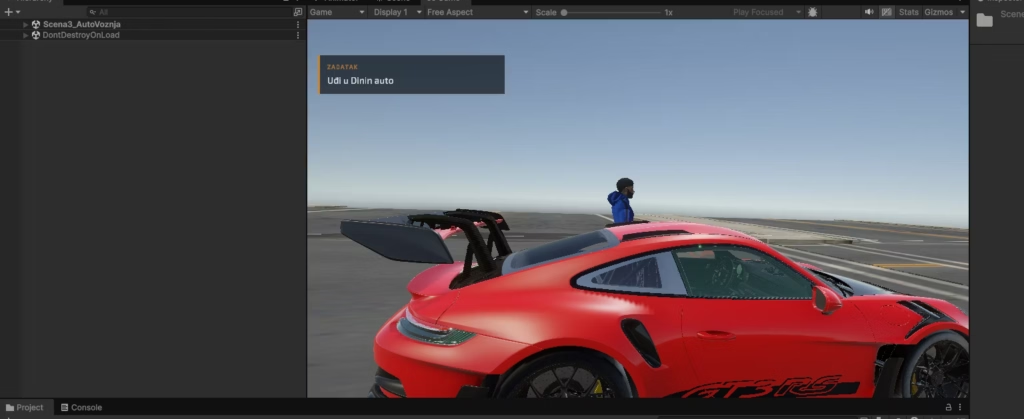
Djedova Automehanika: In Phase 1, the player goes through the emotional, narrative-driven opening. They get introduced to the apartment, board the bus, arrive at the station where Dino is waiting in his car. Through the drive and the dialogue, they learn the full backstory of the workshop and eventually get handed the keys. The first 10 days in-game are meant to help the player get a handle on the basics of survival, trading, and running the shop.
InsertCoin: You're currently working on Phase 2 (35% complete), covering workshop upgrades, night-time customers, and Refurbish 2.0. What does "Refurbish 2.0" actually bring compared to the base repair system?
Djedova Automehanika: Since parts come in from the junkyard and other sources, they're often dirty, greasy, and rusted. Refurbish 2.0 adds more advanced tools for cleaning, sandblasting, and polishing so parts look brand new on the outside. The better you clean and shine something up, the higher the price you can charge for it. Workshop upgrades also unlock more advanced tools, and the night-time customers bring in special, sometimes slightly shady, deals under the cover of darkness.
InsertCoin: Phase 3 is still shrouded in mystery. Can you give us even a hint of what it involves, or does "the story continues" stay a secret for now?
Djedova Automehanika: Phase 3 stays under wraps for now, but I can say it'll bring the conflict with MegaCorp to a head, along with mechanics that will significantly expand the map and what players can do outside of the shop itself. The story continues in a pretty interesting direction.
InsertCoin: How long have you been working on the game so far, and what's been the biggest technical or creative challenge?
Djedova Automehanika: I've been working on this intensively for quite a while now. The biggest technical challenge has definitely been learning everything on the fly and solving problems entirely on my own. Imagine trying to build a complex UI menu, a scene transition system, or a full trading system with zero prior programming background. Every successful build, every script that ran without errors, felt like a genuine win against myself.
Community and What's Next
InsertCoin: Where can people currently follow the game's development or try it out — Facebook, Discord, a demo build?
Djedova Automehanika: Development is being actively shared on my official site, car-parts-simulator.medianewsonline.com, as well as through posts in Balkan gaming Facebook groups like Crazy Gamers - Balkan.
InsertCoin: Are you planning a Steam release or launch on another platform, and when might we see the first public build?
Djedova Automehanika: Since I'm working completely solo without any funding or budget behind me, setting up a Steam page is on hold until I can put some funds together. That said, the first rough demo is coming soon. It'll be released completely free as a .zip file, downloadable through Google Drive and MEGA directly from my site, so people can play it and give me that first round of feedback.
InsertCoin: What would you say to people from the region who grew up around old junkyards and their grandfather's garage, and are about to see that reflected in your game?
Djedova Automehanika: I'd tell them to grab some patience, brew a strong cup of domestic coffee, and get ready for a trip back to childhood and nostalgia. This game was made with heart, by someone who grew up in that exact same Balkan story. I hope you enjoy playing it even half as much as I've enjoyed struggling through, learning, and fighting with Unity to make it happen. Thanks to everyone for the huge support so far.
Car Parts Simulator is being built by a single developer determined to turn Unity inexperience into a fully realised business sim rooted in Balkan car culture. Its risk-based refurbishing system, where a part's true condition only reveals itself days after the sale, gives the trading loop a weight most shop simulators don't bother with. With Phase 2 underway and a free demo on the horizon, it's a project worth keeping an eye on for anyone who grew up around a junkyard or a grandfather's garage of their own.

Comments (0)
Be the first to comment!
Leave a comment as a guest