
TEACHER FROM KUMANE (2026)
📝 Description
The history of the Second World War in this part of the world is usually told through major military campaigns and the handful of names that end up in textbooks, while the fate of small communities and individual people tends to get pushed to the margins. "Teacher from Kumane," a short documentary written, directed, and edited by Marina Veselinović, does the opposite. It takes one local, familial story and turns it into something that speaks to a much larger history of suffering, dignity, and the slow work of remembering.
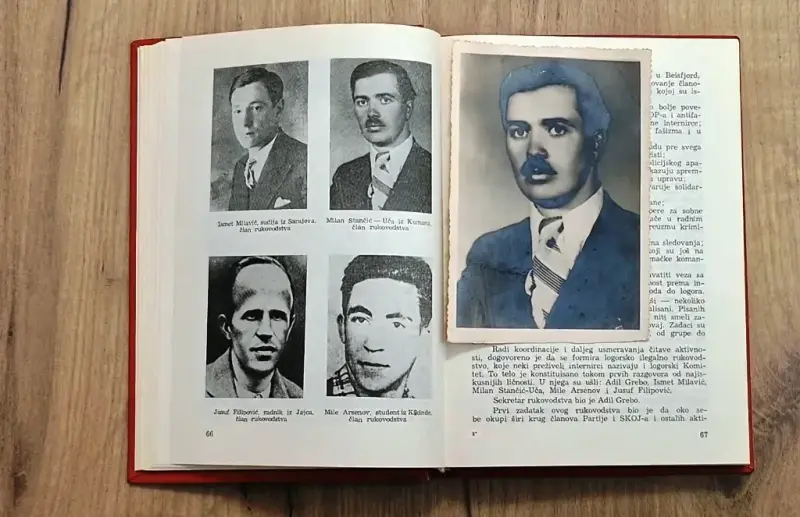
The film follows the path of Milanu Stančić - Uči, a village teacher from Kumane in Banat. In prewar Serbia and Yugoslavia, teachers were far more than educators; they were community anchors, carriers of literacy and culture in places where both were scarce. That figure of the local schoolmaster takes on a genuinely tragic weight once Stančić, along with hundreds of other Yugoslav internees, is deported thousands of kilometers from home to the camp at Beisfjord in northern Norway, near Narvik. The camp existed for barely four months in 1942, exclusively for Yugoslav prisoners, and it remains one of the most brutal facilities the Nazis ran on Norwegian soil, with a death rate that some sources place above that of Auschwitz. On the night of July 17th into the 18th, 287 Yugoslav internees were killed there under the pretext of a typhus outbreak. That single, distant, and still under-discussed atrocity is where the film ultimately places one man from Kumane.
Structurally, the documentary leans on a clear visual contrast between the gentle, sunlit Banat plain and the frozen, punishing landscape of the Norwegian north, and that contrast does most of the emotional heavy lifting. What actually builds that Norwegian half of the story is worth dwelling on, because this is where the production gets genuinely interesting from a craft standpoint. Rather than relying on traditional animation or costly reenactment, Veselinović constructs the camp, the guard towers, the executions, and the burning barracks entirely through AI-generated visuals, credited in the closing titles to a stack of tools including Runway, Luma AI, Canva, Seadream AI, and Gemini, with music and sound licensed through the CapCut library. For a solo, independently produced local-history documentary, this is a genuinely resourceful way to visualize events for which no footage exists, and the sepia, silhouette-based aesthetic gives the film a consistent, storybook-like tone rather than the disjointed look AI-assisted sequences often have.
It's also, however, a choice the film never actually tells its audience it's making. Nothing on screen or in the framing of the documentary flags these sequences as AI-generated until the credits quietly list the tools involved, and depicting a real, undocumented massacre through generative imagery is the kind of decision that increasingly invites scrutiny in documentary filmmaking, regardless of budget or intent. That doesn't undercut the sincerity of the project. It does mean the film would be stronger, and more transparent with the very audience it's trying to educate, if it owned that choice openly rather than leaving it for the end-credit fine print.
Where the film is unambiguously strong is in its handling of the archival record. Veselinović builds much of the documentary around real, physical documents: a wartime German-language police file from Veliki Bečkerek, photographs of the Allied commission that uncovered the mass graves at Beisfjord in 1945, and Ljubo Mladenović's book "Beisfjordska tragedija," whose printed list of names and biographical notes on the victims gives the film its most quietly devastating moments. Present-day footage of Kumane's church, its wheat fields, a memorial plaque, and small brass memorial stones set into the pavement grounds the story back in the everyday, ordinary place these men actually came from.
"Teacher from Kumane" is a sincere, well-researched piece of local-history filmmaking, and its central achievement is educational rather than cinematic: it takes a chapter of Yugoslav wartime history that rarely makes it into general education and gives it a name, a face, and a hometown. The AI-assisted visualization of the Beisfjord camp is an inventive workaround for a story with no surviving footage, and one the film should be more upfront about using. For anyone interested in regional micro-history and the kind of stories that survive mainly in family memory and local archives, it's a small but genuinely worthwhile find.