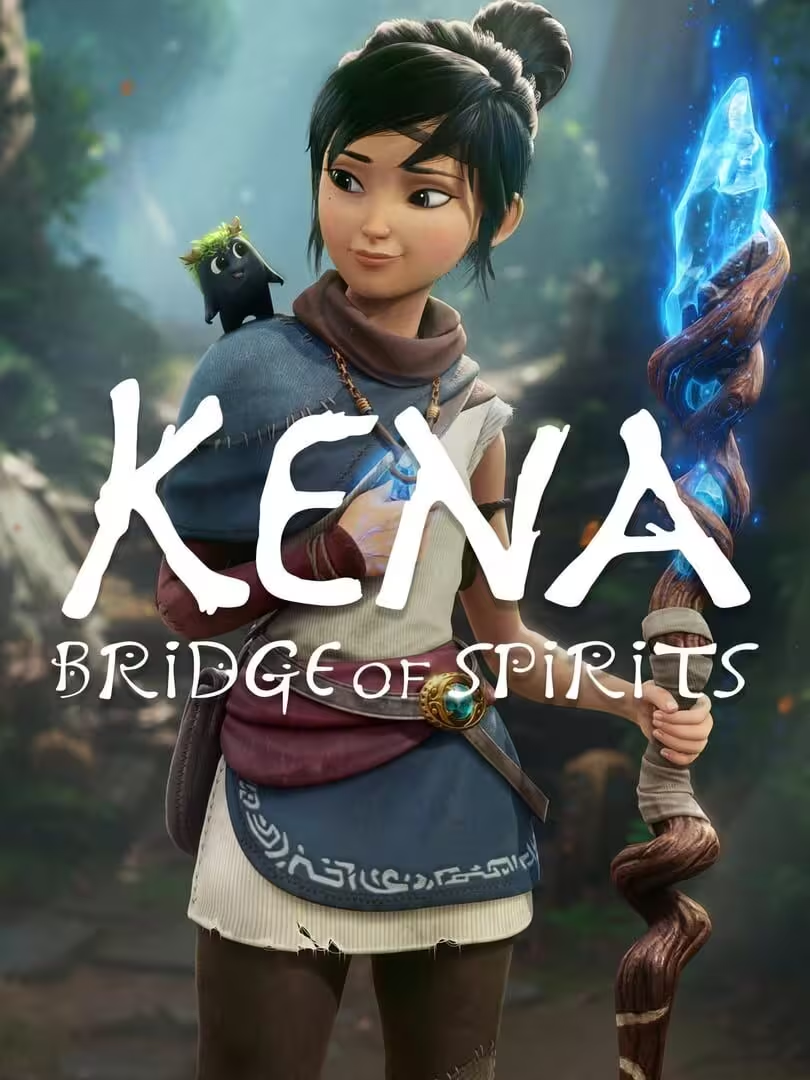


Ember Lab may not have the decades‑long catalogue of a Capcom or Square Enix, yet its debut title, Kena: Bridge of Spirits, made an immediate impact when it first released, surprising many with a level of visual artistry and emotional maturity more commonly associated with long‑established studios. What began life as a passion project from a small team known primarily for animation work quickly grew into one of the most talked‑about action adventures of its year, praised for its heartfelt storytelling, expressive characters and a world that felt as though it had been quietly growing long before players ever stepped into it. Now, with its arrival on Switch 2, Nintendo’s audience finally has the chance to experience a tale that blends spiritual folklore, open exploration, and confident action into something far richer than a standard 3D platform adventure.
Set in a land scarred by past tragedy, the story follows Kena, a young spirit guide whose role is to help restless souls find peace. Her journey leads through abandoned villages, corrupted forests and ancient shrines, each shaped by the lingering emotions of those who once lived there. The narrative draws heavily on themes of grief, memory, and renewal, weaving them into a structure that feels intimate despite the sweeping landscapes. It is a world where every ruin hints at a life interrupted, every creature reflects the balance between decay and rebirth, and every encounter pushes Kena closer to understanding the weight of the role she has inherited. The Switch 2 version arrives at a time when the system is still defining its early identity, and Kena’s presence immediately strengthens that foundation, offering a story‑driven adventure with the scope and emotional pull of a much larger production.
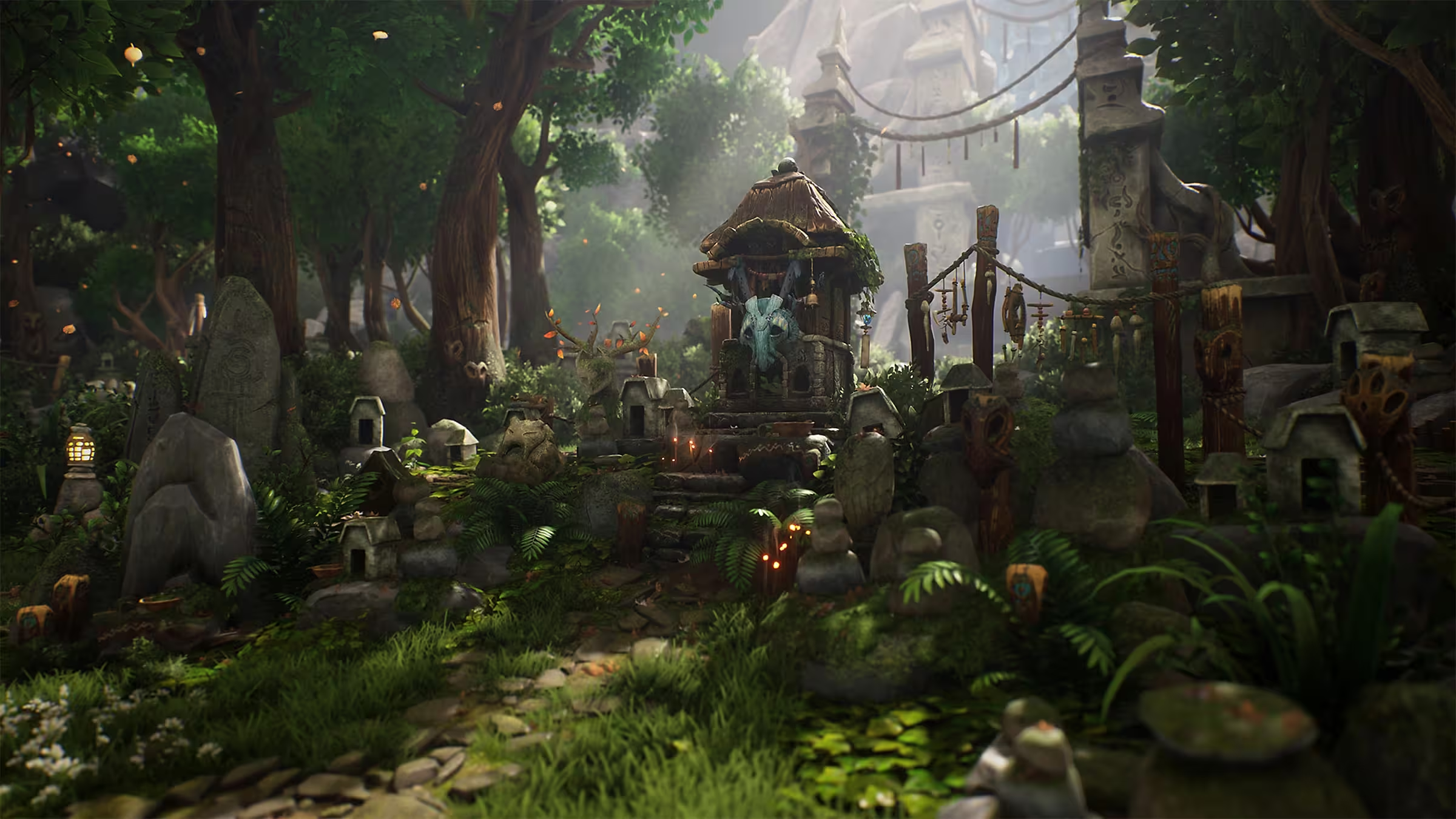
The artistry is evident from the first steps along the forest path. Colours carry a richness that gives each region its own character, from the warm glow of sunlit clearings to the unsettling distortion of corrupted zones where the land twists into unnatural forms. The Switch 2 handles these transitions with impressive steadiness, maintaining smooth performance even as the scenery grows more elaborate. Water trickles down moss‑covered stones, drifting particles catch the light in delicate patterns and distant waterfalls send faint echoes across the valley. Nothing feels overstated; the world reveals itself with a quiet assurance that comes from careful craftsmanship rather than showmanship.
The soundtrack deepens this sense of place, weaving gentle melodies with sweeping, adventurous themes that rise at just the right moments. There are passages that carry the same grand, uplifting energy found in the great platforming epics, giving the journey a sense of scale that extends far beyond the immediate surroundings. Voice work complements this beautifully, with performances that bring warmth, vulnerability and quiet determination to the characters encountered along the way.
Exploration forms the backbone of the experience, and the world is designed to reward those who take the time to wander. Pathways twist into secluded groves, forgotten shrines and hidden pockets of story that enrich the journey without demanding attention. The map offers guidance, yet the design gently nudges players to trust their instincts, to follow a faint trail of light between trees or investigate a distant sound that echoes across the valley. This approach gives the adventure a sense of freedom that few games manage, allowing discovery to feel organic rather than prescribed.
The Rot companions play a central role in this, their playful presence adding charm while also serving as key tools for solving environmental puzzles, clearing corruption and unlocking new routes. Their involvement in both exploration and combat gives them a sense of purpose beyond simple collectables, and their animations bring life to even the darkest regions. Trying to uncover more of them along the way also adds to the overall intrigue, and then being able to dress them in various cute outfits is the cherry on top of an already scrumptious cake.
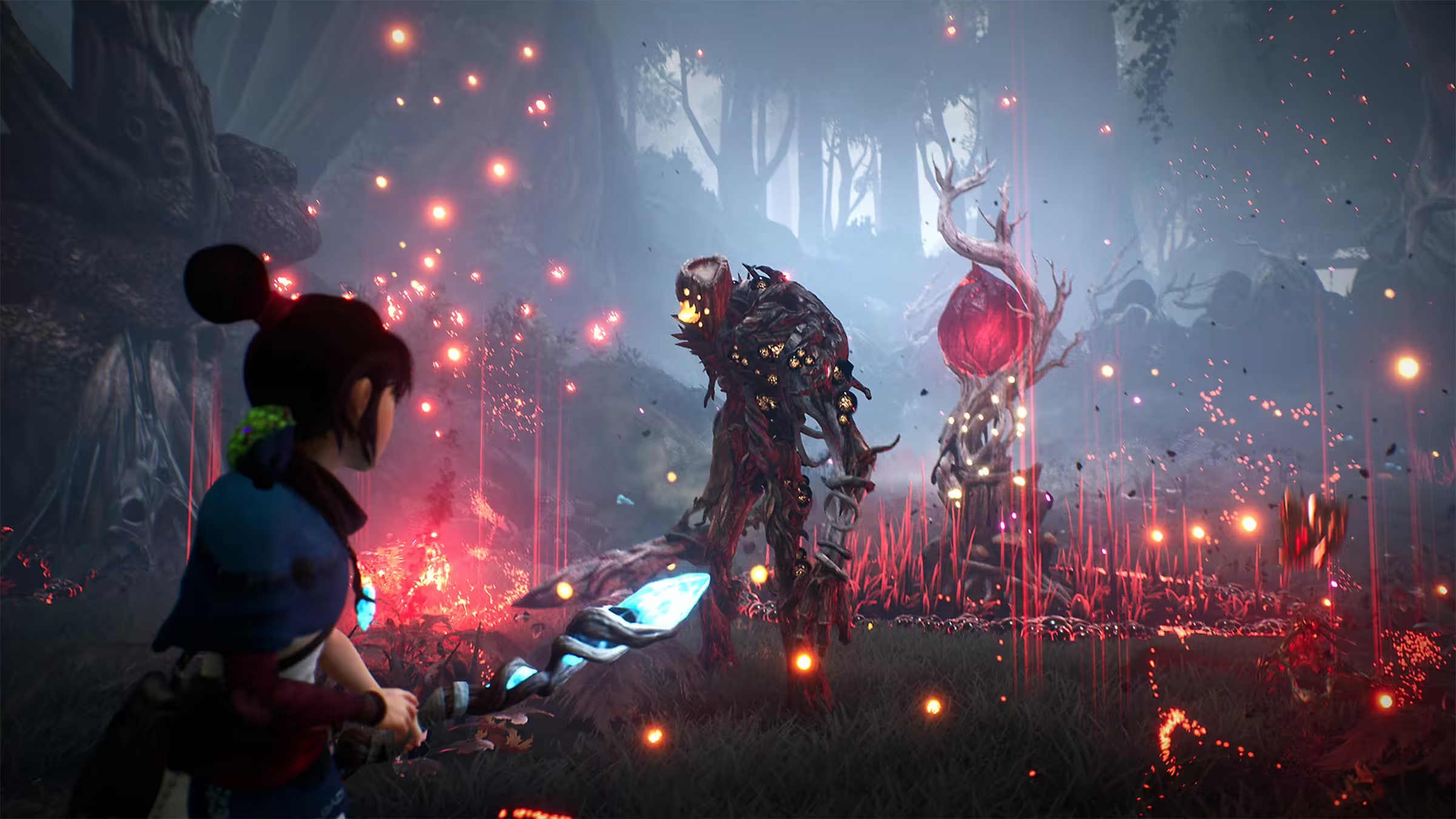
Combat emerges from this sense of exploration with a natural ease, never feeling like a separate mode but an extension of the world’s temperament. Encounters often begin quietly, with the rustle of leaves or the low groan of corrupted roots shifting beneath the soil, before erupting into bursts of movement where Kena’s staff becomes a fluid extension of her intent. The Switch 2 handles these moments with a steadiness that allows the timing‑based strikes, parries and dodges to land cleanly, giving each encounter a sense of weight without sacrificing responsiveness.
The bow adds a sharpness to the rhythm, cutting through the chaos with precise shots that open brief windows of opportunity. The Rot, ever-present and always expressive, shift from playful companions to vital allies, swarming corrupted growths, pinning enemies in place or lending Kena the strength needed to break through a creature’s defences. Their courage system adds a subtle tension to each fight, creating a push‑and‑pull dynamic where every decision carries a hint of risk.
Larger confrontations build on this foundation with a theatrical flair, although not always with the consistency the rest of the game displays. Some battles unfold with a sense of rising momentum, drawing on the surrounding environment and the emotional weight of the story to create encounters that feel both challenging and meaningful. Others spike unexpectedly, demanding precision that seems at odds with the pacing that precedes them. These moments stand out not because they are unfair, but because the rest of the journey flows with such natural grace that any abrupt shift feels more pronounced. Even so, the Switch 2’s performance ensures that the difficulty never stems from technical strain; the action remains smooth, readable and grounded in the same visual clarity that defines the wider world.
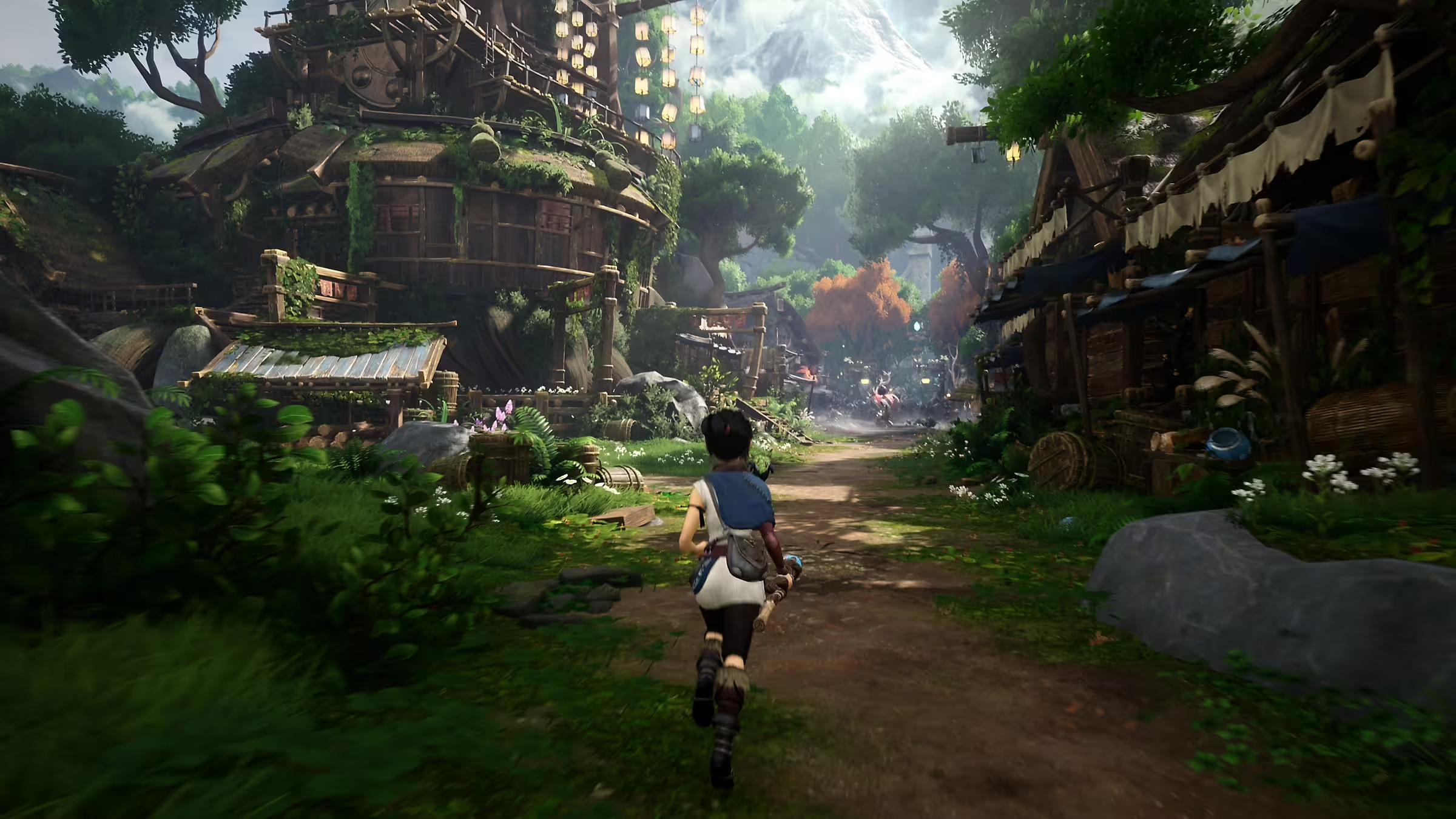
The story threads itself through these moments with a quiet confidence, never rushing to explain but allowing the land, its inhabitants and the lingering spirits to speak through their surroundings. Themes of loss and renewal shape the journey, reflected in the way corrupted areas slowly return to life as Kena helps troubled souls find peace. The voice acting carries much of this emotional weight, with performances that capture the uncertainty, resolve and tenderness that define the characters. Kena’s own arc unfolds with a gentle touch, revealing strength not through grand declarations but through the compassion she shows to those trapped between worlds. The Rot, for all their playful energy, become a grounding presence in this emotional landscape, offering levity without undermining the seriousness of the tale.
Progression mirrors this blend of emotion and exploration. New abilities emerge naturally from the journey, expanding Kena’s movement, combat options and environmental interactions in ways that encourage players to revisit earlier areas with fresh eyes. Hidden routes, sealed shrines and forgotten corners of the map gradually reveal themselves, creating a sense of a world that grows alongside the player rather than simply unlocking on command. The value proposition is further sweetened by the inclusion of the original release’s Anniversary Update content from the day of launch, offering New Game+ and dedicated Spirit Guide Trials that reward unique outfits for Kena. The Switch 2’s quick transitions between regions help maintain this momentum, allowing the adventure to flow without interruption as new paths open and old ones take on new meaning.
As the journey reaches its later stages, the world feels more cohesive than ever, its landscapes, characters and challenges woven into a single, continuous experience. The Switch 2’s hardware supports this cohesion with a remarkably stable 30fps performance. While there are expected, minor concessions in foliage density compared to its beefier home-console counterparts, the image quality remains crisp and the lighting gives each environment a distinct mood. Whether exploring dense forests, navigating corrupted ruins or engaging in fast‑paced battles, the game maintains a clarity that allows its artistry to shine. The haptic feedback adds subtle texture to key moments, enhancing the sense of presence without drawing attention to itself.
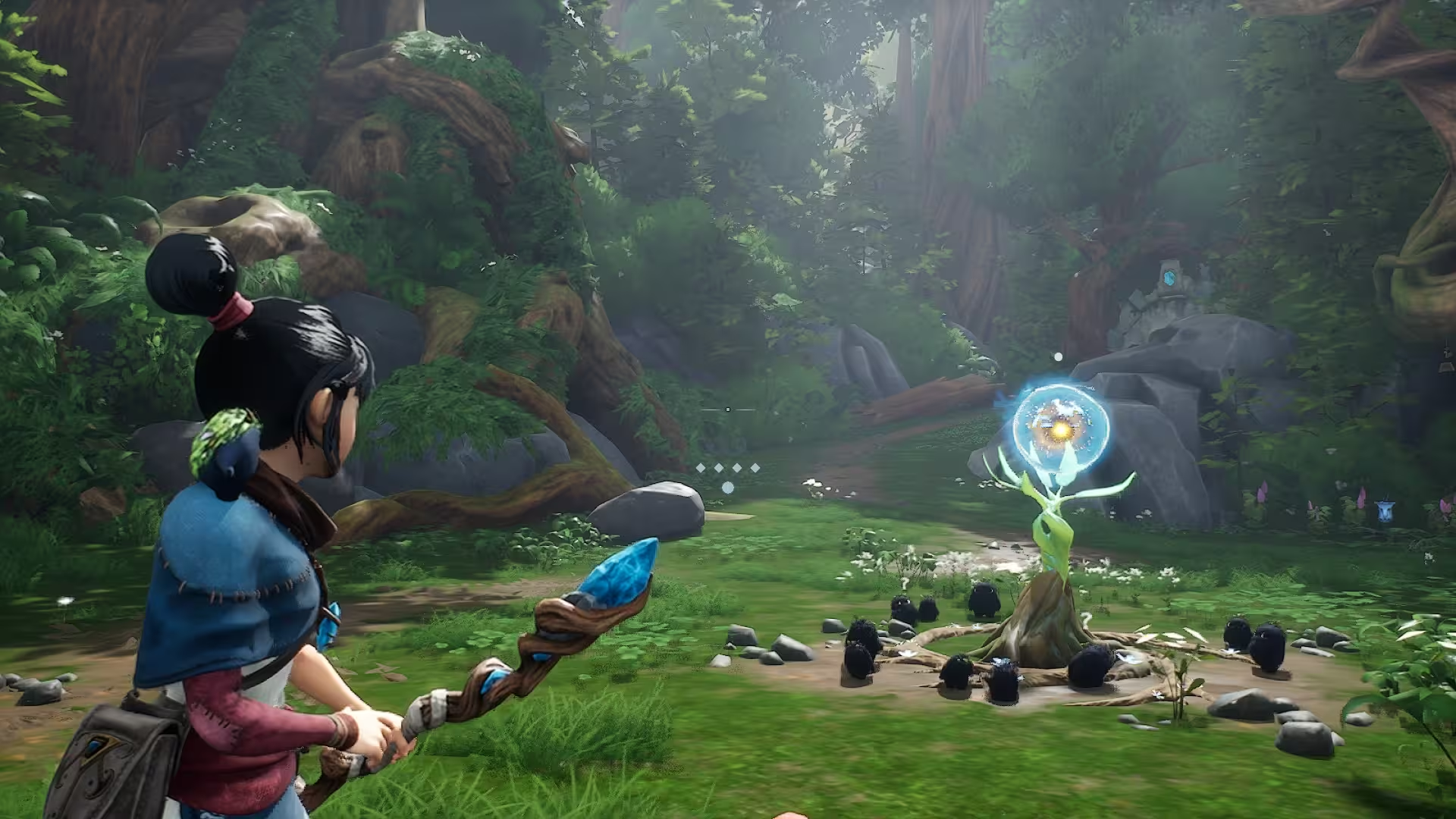
As the final regions open up, the sense of place becomes even more pronounced, with landscapes that feel shaped by the memories of those who once walked them. The corruption that once choked the land begins to thin, revealing pockets of calm that act almost like breaths between the heavier moments. These quieter stretches matter just as much as the battles, giving space for the story’s emotional weight to settle and for the world’s gentler details to shine through. Small touches — drifting petals caught on the wind, the soft hum of restored shrines, the Rot gathering around Kena with a mixture of curiosity and affection — all reinforce the idea that this is a land slowly remembering how to heal.
By the time the journey reaches its final act, the connection between player, character and world feels firmly established. The challenges grow sharper, the stakes rise, and the emotional threads woven throughout the adventure begin to converge with a clarity that gives the closing chapters a quiet power. The Switch 2 holds steady through these moments, allowing the animation, lighting and sound design to carry the full impact of the story without distraction. What lingers is not just the spectacle of the final encounters, but the sense of having walked through a place that changed because of your presence — and changed you in return.
It is this cohesion, this steady intertwining of atmosphere, action and emotion, that defines Kena: Bridge of Spirits on Switch 2. The world feels alive, the characters resonate, and the adventure unfolds with a confidence that belies the studio’s size. Even when the difficulty wavers or the path forward becomes momentarily unclear, the experience never loses its pull. Instead, it invites players to lean in, to explore a little further, to listen to the land and the spirits that inhabit it. The result is a journey that feels both intimate and expansive, shaped by artistry and carried by heart.