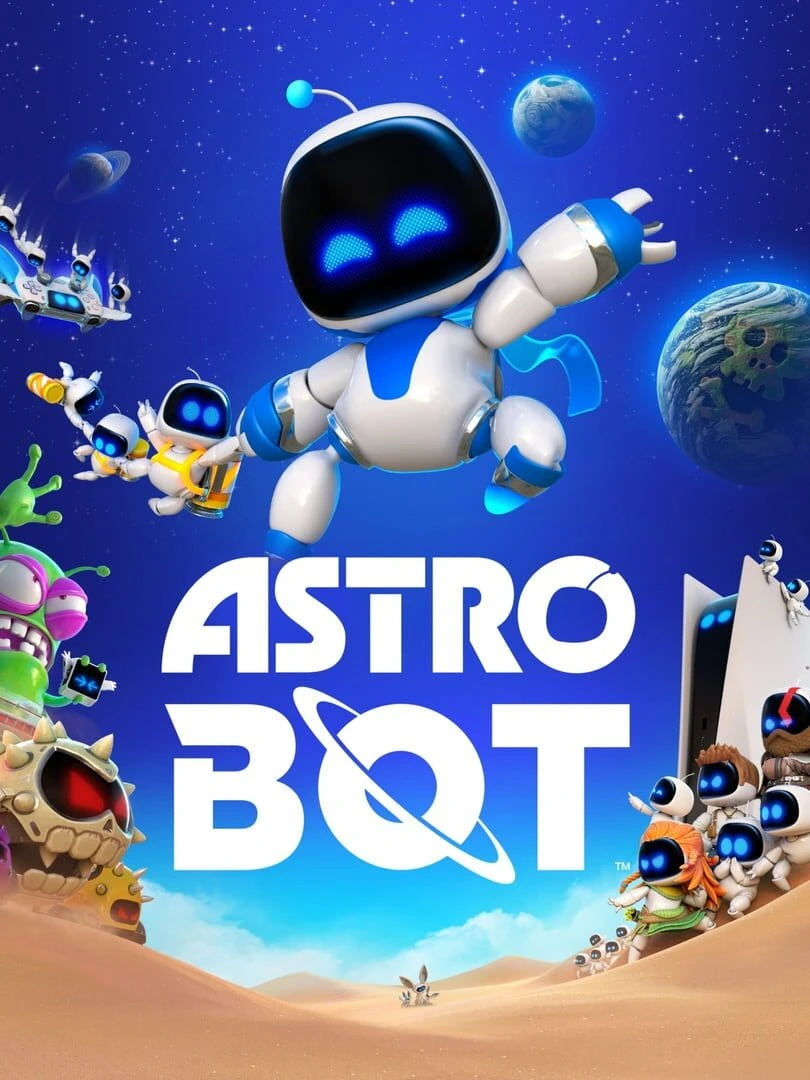


The golden age of 3D platformers, with its cute mascots, well-designed levels, and countless collectibles, was a source of joy for millions across the world. Sony was a major player in the era through its hosting of classics like Ape Escape, Crash Bandicoot, and Rayman on its consoles, but once the genre started to decline, it retreated, leaving Nintendo to take control of that niche. Since then, it’s focused on story-driven games that blurred the lines between cinema and gaming, but in-house studio Team Asobi’s latest game brings them back to their roots and honours the road they’ve travelled from then to now. Astro Bot is a colourful and inviting 3D platformer that celebrates the history of PlayStation and offers a polished experience that, while simple and derivative, is sure to please those craving a return to the genre.
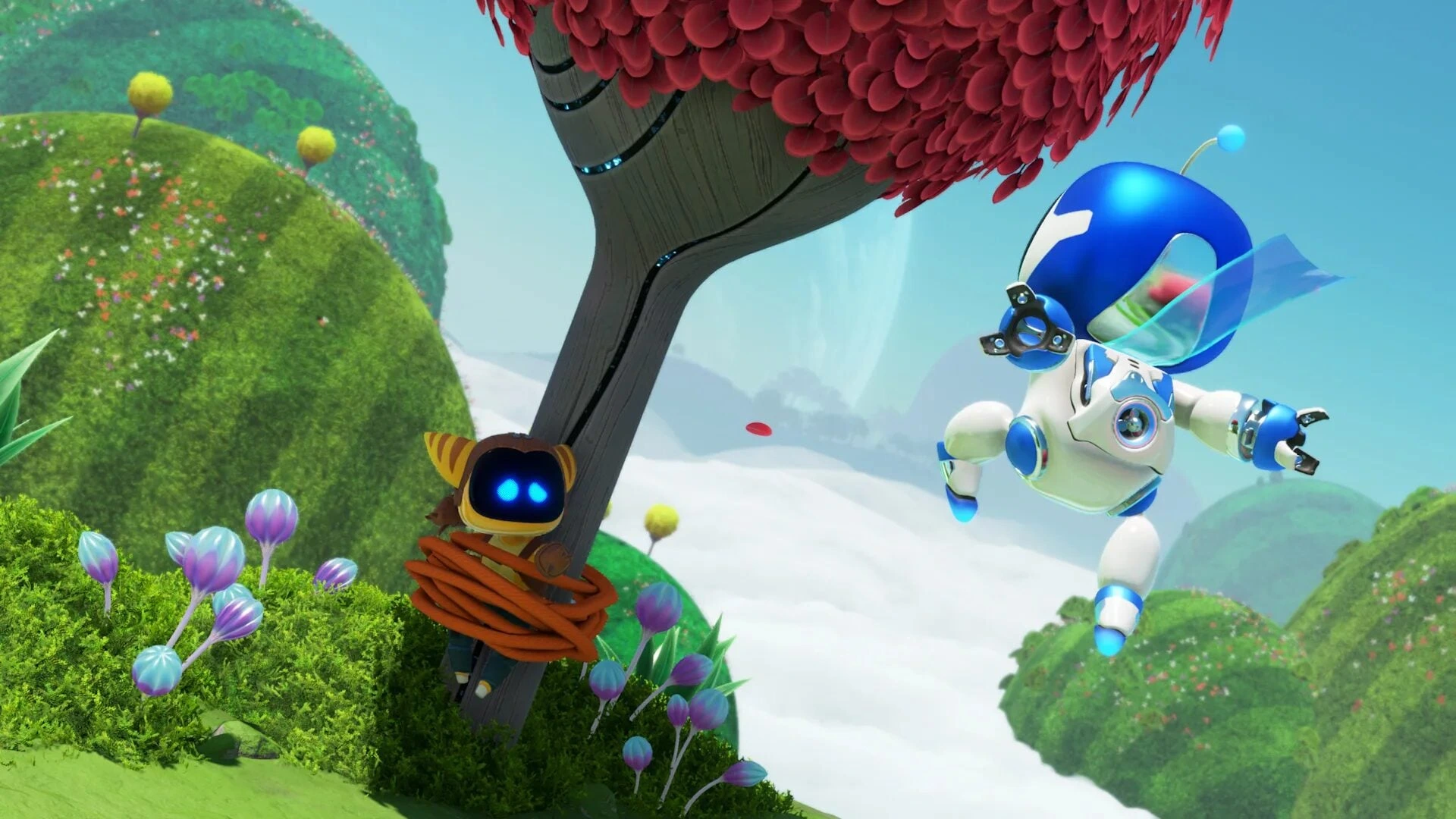
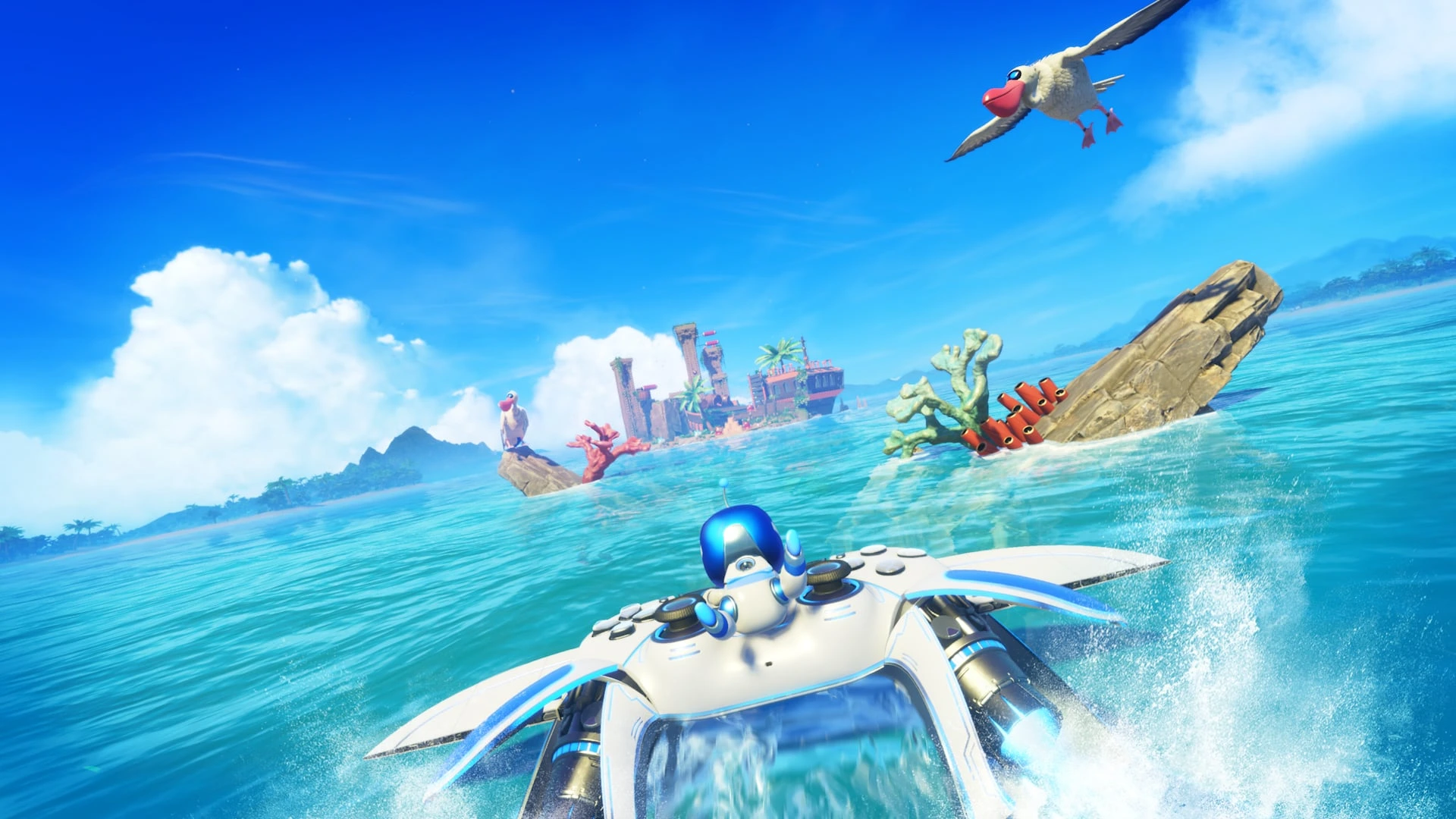
Astro and his friends are traveling the cosmos when a nefarious alien known as Nebulax steals their ship’s parts and scatters the crew across the stars. Forced into crashlanding on a nearby planet but undeterred, Astro sets off on a heroic expedition to get his friends and ship parts back from the clutches of a no-good space bully. His mission leads him across sun kissed beaches, starry asteroid fields, and fantastical landscapes like a planet of sweets and a high-roller casino, as he steadily brings his crew and ship together again.
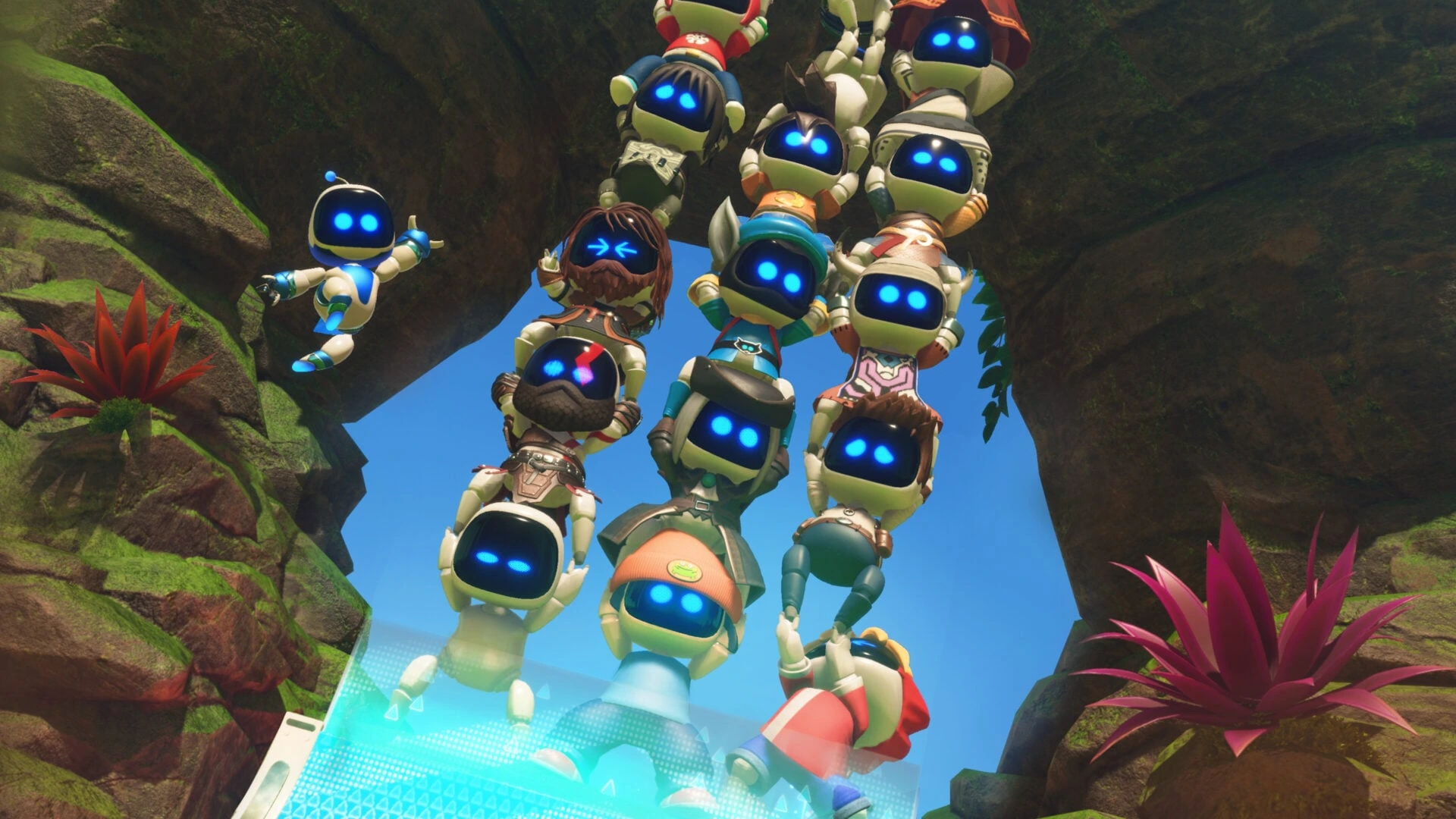
In true collectathon fashion, each planet is a tightly-designed obstacle course housing many collectibles and secrets. The platforming challenges, while simple, are delightful due to consistent variety in level themes and set pieces, as well as Astro’s smooth control scheme. Armed with jump, hover, and spin functionalities, he’s a bot of all trades, and once he equips one of several power-ups, it’s game over for the bad guys. It’s for the best as many of the bots stranded in each level can be hard to find, making it necessary to clean house and explore thoroughly. Once a set amount of bots are rescued per galaxy, Astro and his crew can fight the boss of that area and advance into the next one. The optional puzzle pieces and occasional secret exits also open up customisation options and new levels respectively, ensuring that players are rewarded for their curiosity and efforts outside of the main quest.
Each of the five main galaxies offers a special level themed around a classic Sony franchise, and these are some of the best moments in the game due to their extensive fanservice and the unique power-ups they feature. From Kratos to Nathan Drake, Astro takes on the form of a Sony superstar and harnesses their power for combat and puzzle solving that honours the series being represented. Even outside of those levels, there’s plenty of love given to PlayStation history, which includes a surprising amount of third party, non-exclusive franchises like Resident Evil, Street Fighter, and more. Players unfamiliar with PlayStation can still find much to appreciate about the references.
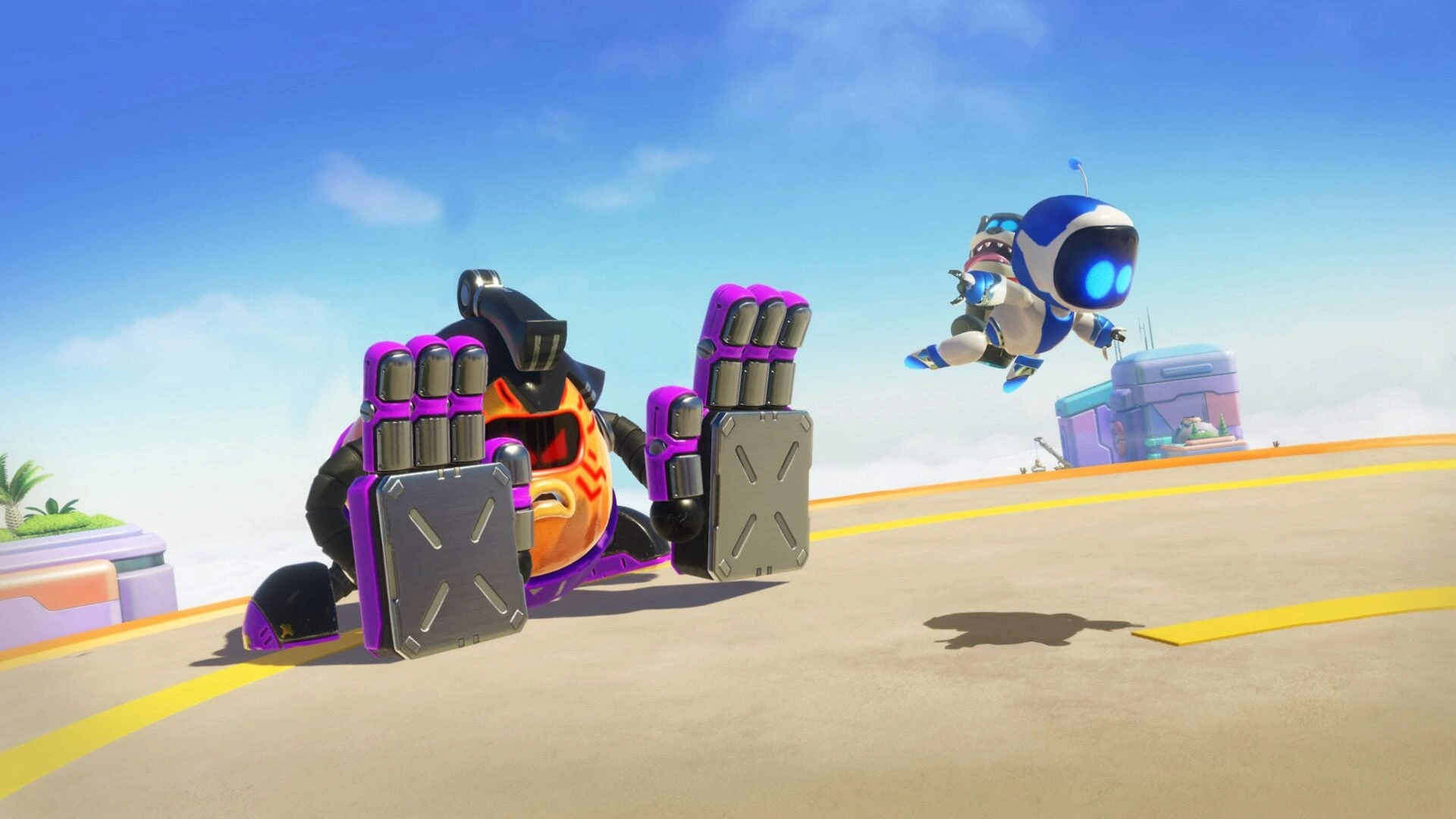
Unfortunately, its celebratory and all-encompassing nature causes the game to lack a concrete identity of its own, which isn’t helped by the sterile, albeit cute, designs of Astro and his crew, or by the disappointing enemy design, which is limited to uninspired blobs and creatures. Some of them feel even eerily close to enemies in other games, such as Wigglers and Thwomps from Nintendo’s resident Italian plumber. In fact, that feeling permeates throughout the game, with there being an undeniable influence on it by Super Mario Galaxy, with many level gimmicks and themes having shown up in it nearly two decades prior. Luckily, Astro Bot manages to dodge controversy by doing enough different and mostly replicating the appeal of its inspirations in a respectable way.
Where it stumbles in that pursuit, though, is in the absence of skill expression or a meaningful draw to its gameplay beyond its simple pick-up-and-play nature. It’s easy from start to finish, with the exceptions of certain side and post-game challenges, and compared to the varied movesets or speedrun potential in other platformers, there’s nothing much of that sort here. It also falls behind in replayability, as its best moments only pack a punch the first time and its gameplay loop is entertaining, but not substantial enough to satisfy on a second run. It has the bones of a 3D platformer, sturdy ones at that, but not the meat, which keeps it from standing upright as one of the genre’s best. It’s a shame as, otherwise, it’s a promising game with several compelling ideas.
Like Astro’s Playroom before it, Astro Bot makes heavy use of the PlayStation 5’s DualSense controller and its features such as adaptive triggers, haptic feedback, touchpad input, and motion controls for a sensory experience that goes beyond sight and sound. It’s a small but significant element that adds an extra dimension to the gameplay and shows the imagination that went into designing the controller. Along with the bright, clean visuals and appropriately upbeat soundtrack, it’s easy to see that the developers valued fun and creativity over the drama and realism of Sony’s usual outings.
The best of platformers rely on more than just nostalgia or the fun factor; they immortalise themselves by being so memorable in their design and how clearly the final product comes together that even those free of a critic’s eye can recognise that they’ve come upon a masterpiece. Astro Bot nails the critical elements like having a smooth control scheme, fun level themes, and a family friendly, upbeat vibe, but instead of going a step further and aiming to outdo what it was inspired by, it stops in its tracks. Its platforming is functional and satisfying in its basics, but with many of its ideas seen elsewhere and so much of its focus dedicated to elevating other games, it doesn’t stand out in the way it could have.