

The one writing this has tried all types of games, and has found good and bad titles in every single one, but has always struggled with a kind of “genre” that exists mostly in his own head – a category he refers to as the “anime video game.” What’s that? It’s a (usually) low- to mid-budget JRPG or TRPG that religiously avoids being something more than a bundle of anime tropes, tends to feature endless and highly-skippable dialogue, and believes that more numbers automatically creates more depth. They also like to include stories written with the sophistication of a Saturday morning cartoon and user interfaces that resemble tax software. Mugen Souls Z, a direct sequel of something that already embodied many of these tendencies, may be one of the purest examples of this imaginary genre. If someone asked yours truly to define the concept, he could simply hand them this and walk away.
Mugen Souls Z opens with a barrage of anime nonsense. Characters shout, pose, explain themselves, explain each other, and then explain things that nobody was confused about in the first place. The cast consists largely of familiar stereotypes: the energetic one, the arrogant one, the cute one, the eccentric one. Each introduction is presented as though a fascinating new personality has arrived on stage, but you’ve met these people before. Not necessarily these exact people, but their genetic ancestors have been occupying JRPGs for the last twenty years.
The writing itself possesses the ability to be both relentless and empty. Characters talk constantly, yet very little info is actually acquired. Scenes stretch on long after they’ve communicated their single useful idea. Forgettable jokes are repeated with plenty of determination. Important events become buried beneath mountains of filler dialogue. There is many an occasion where players reach the end of a lengthy conversation and realise that the only thing they have learned was that somebody likes food. Is that supposed to be character development?
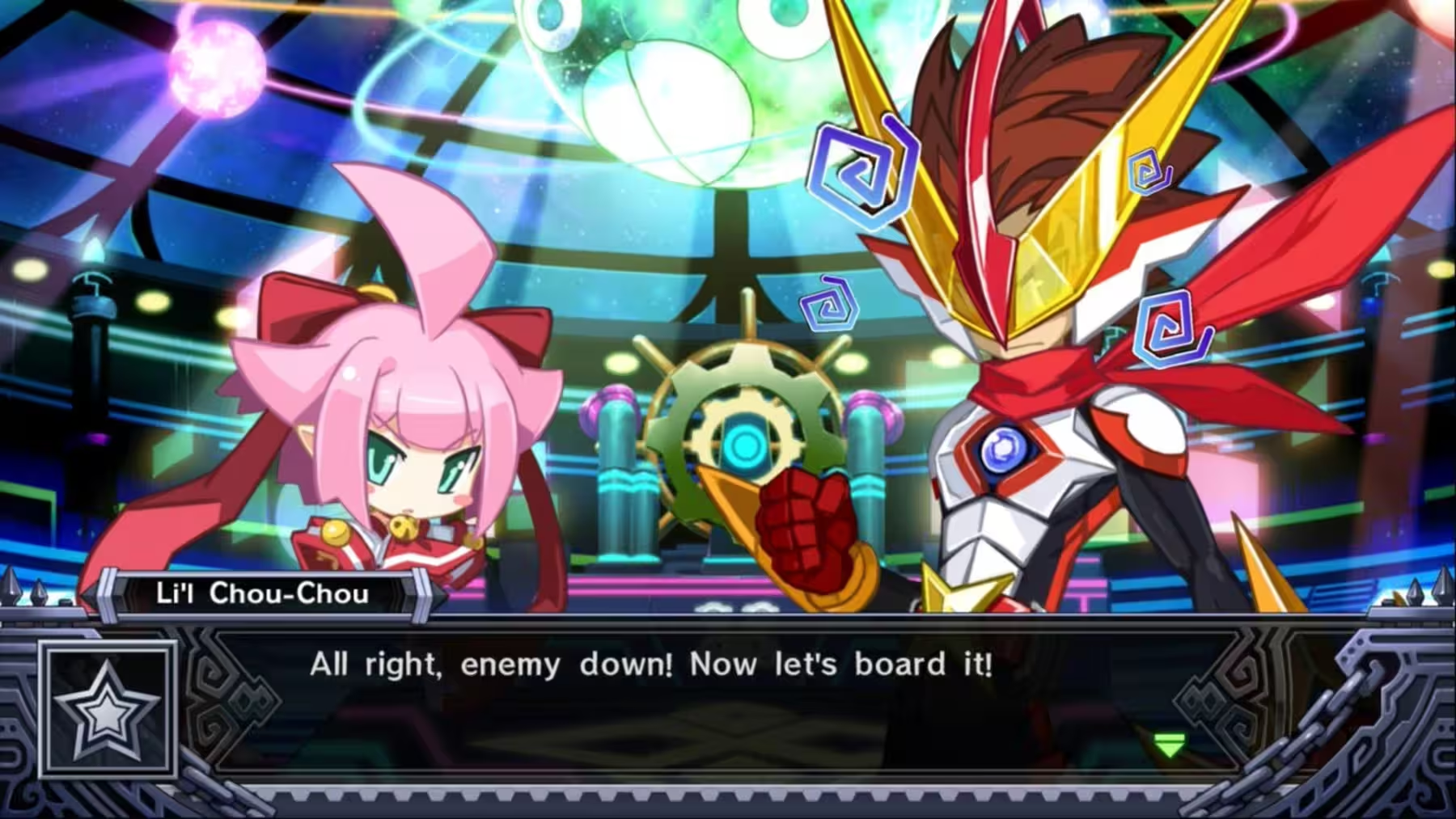
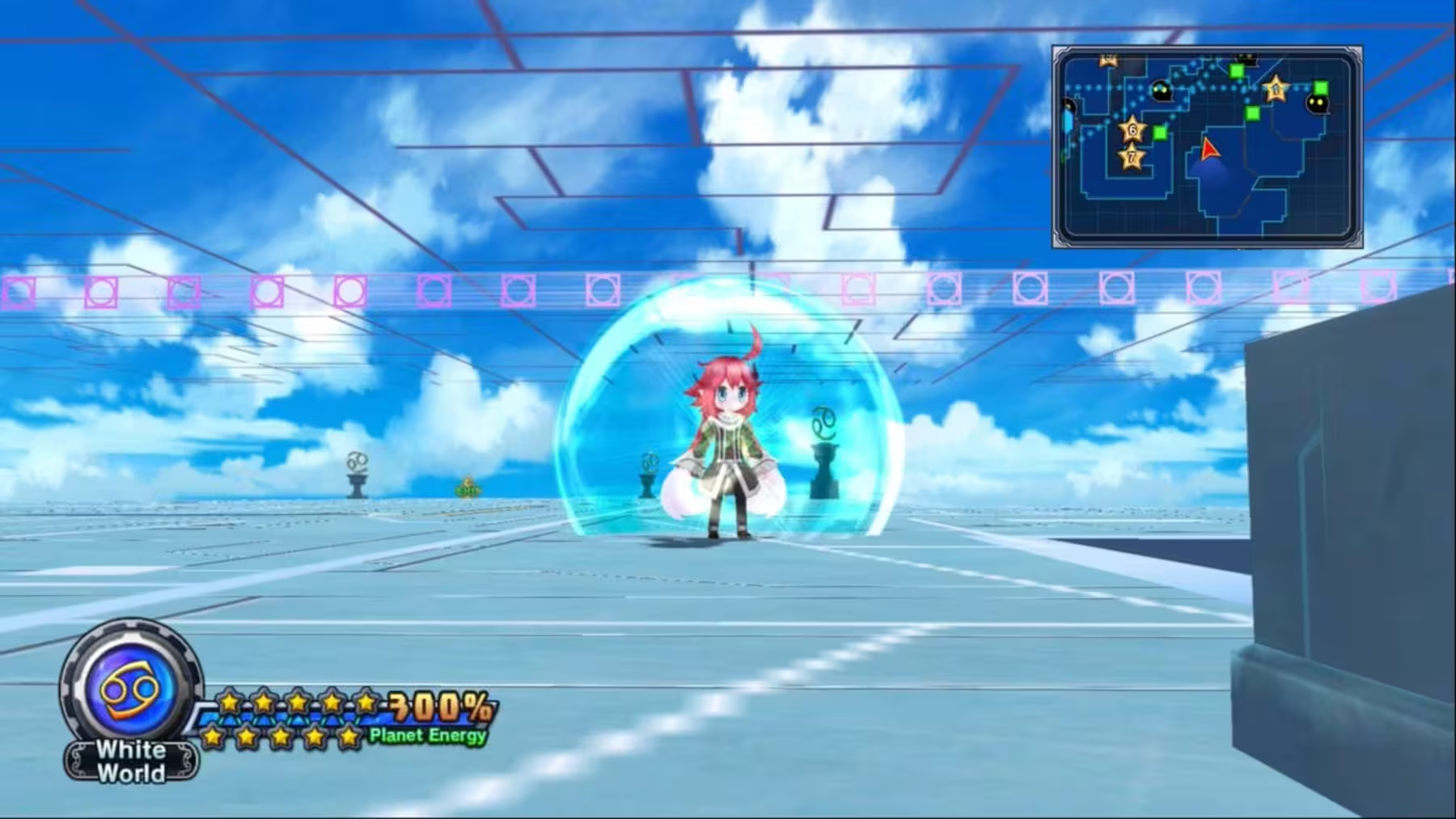
Good RPGs know when to accelerate, when to slow down and when to simply get out of the way. Mugen Souls Z seems to be suspicious of this notion and doesn’t care about silly things like good pacing. Every time the adventure threatens to build momentum another cut-scene arrives. Every time an objective appears somebody decides that now is the perfect opportunity for an extended conversation or tutorial. The maps of the original were criticised for being tiny? Mugen Souls Z’s response appears to have been to make them unnecessarily sprawling.
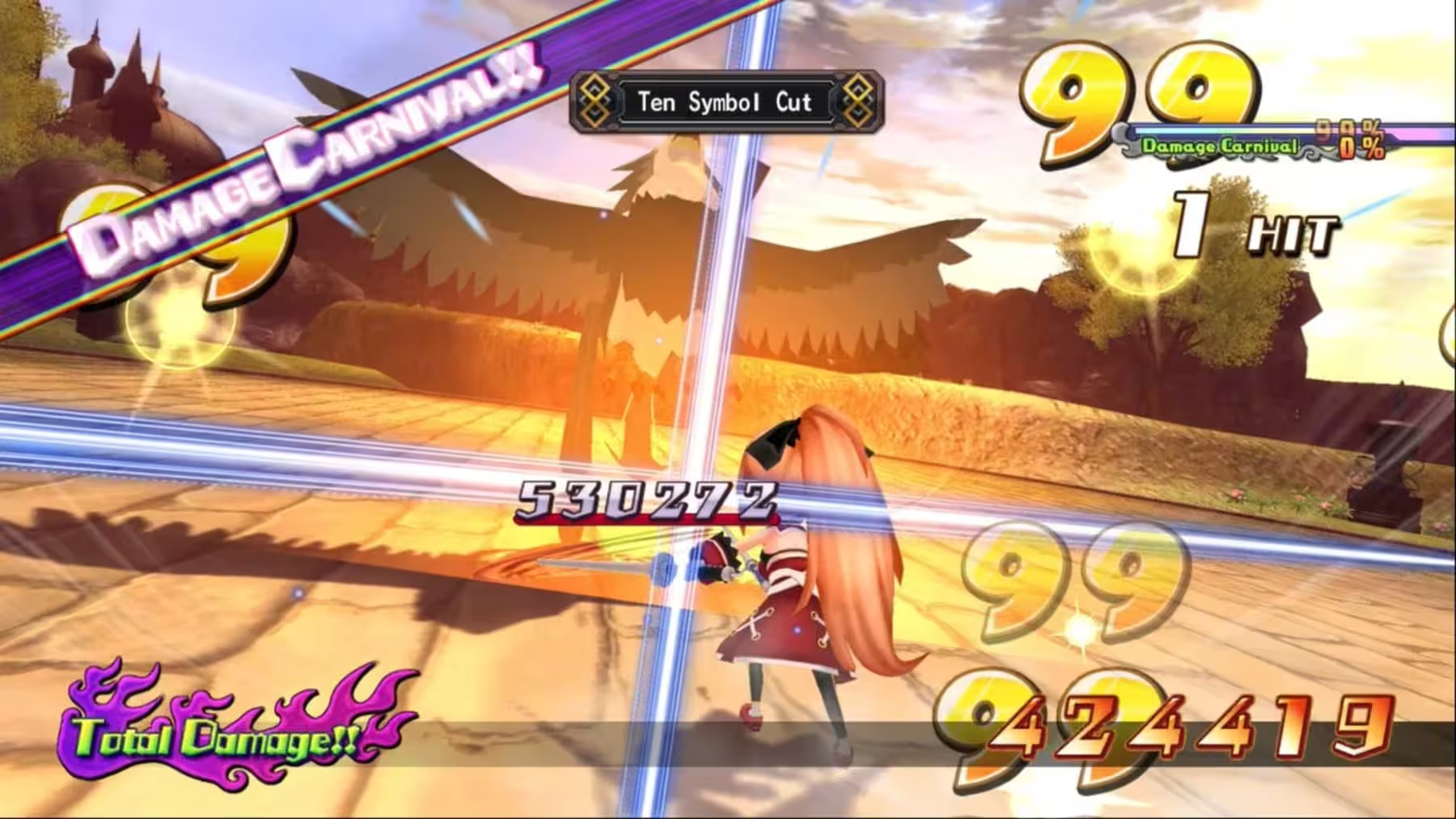
Enemies are launched around the battlefield; huge attacks fill the screen with colourful explosions; damage values erupt in every direction. Does this ever feel as epic and exciting as it thinks it is? Sadly, no. A big problem is that with combat, while for the first few hours everything creates the illusion of depth, this is far more interested in providing options than reasons to use them. This becomes even clearer once progression systems begin multiplying. Levels, enhancements, weapon upgrades, clothing bonuses, skill trees, item refinement systems. Of course, the issue is not that these systems exist, but how few of them seem to matter.
Like with Xenoblade Chronicles 2, another one this critic puts in his anime video game category, quantity is not depth. Fifty statistics do not automatically create meaningful decision making. Sometimes they just create fifty statistics. The interface is where all these systems come together to form a sort of administrative nightmare. Menus lead to submenus, which lead to additional submenus, which contain information relating to systems referenced in entirely different menus. Numbers everywhere. Tiny symbols compete with tiny text for the player’s attention. There are strategy titles with simpler presentation than this.
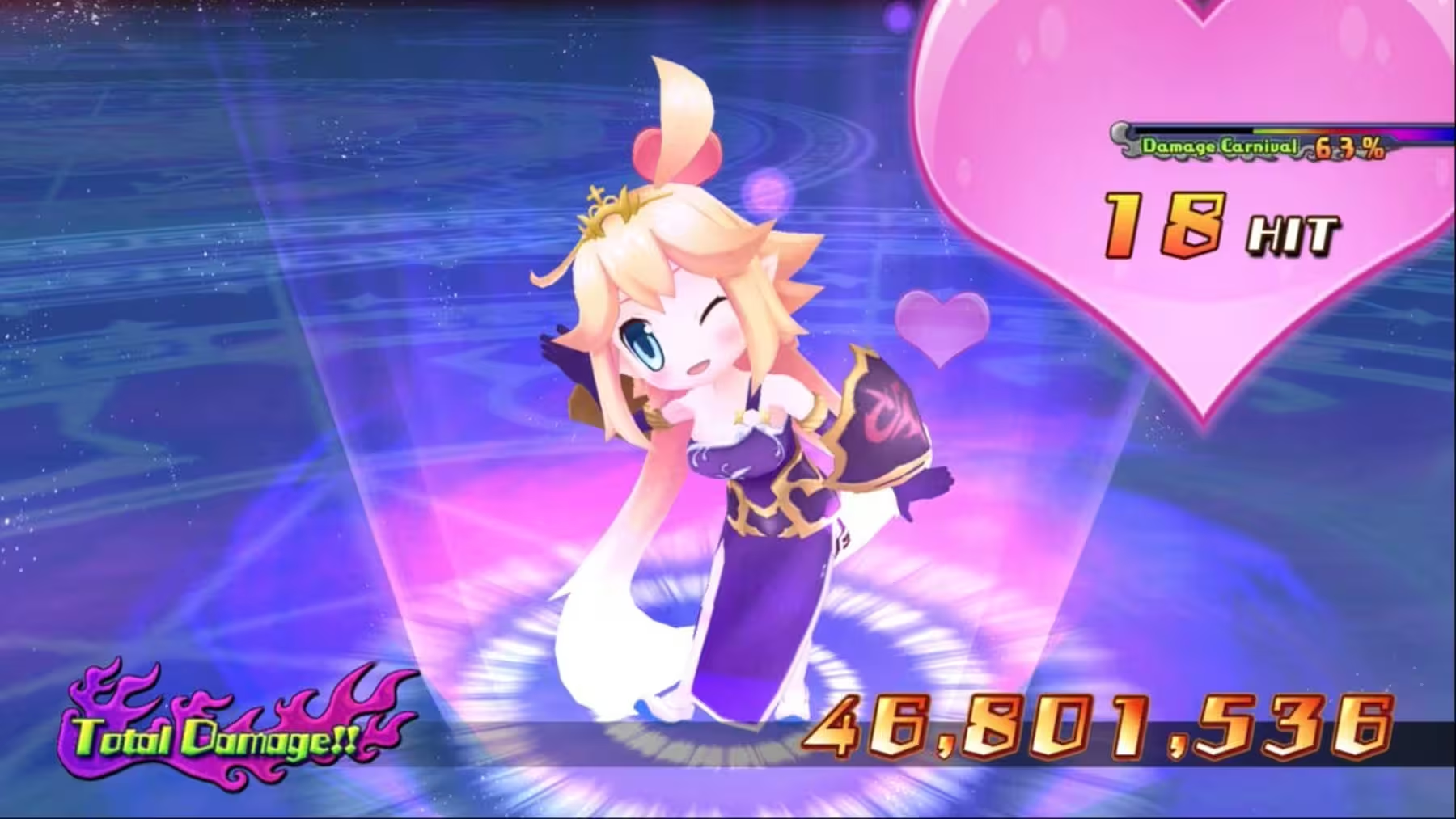
In terms of visuals nobody expects a production of this scale to compete with major blockbusters. The problem here has nothing to do with technical quality so much as artistic identity. Environment design is…functional with large portions of this adventure blurring together into a haze of generic fantasy and sci-fi locales. The cel-shaded character artwork is…decent, and some of the costume designs are genuinely enjoyable, but as a whole few will come here for the looks of it all.
The humour and tone further narrow the appeal. Much of the comedy relies on exaggerated anime behaviour, fourth-wall jokes, fanservice, self-referential humour and familiar clichés. For some this will probably be the strongest feature on offer – and, to be fair, it is. There are a few moments where the cast’s misadventures become somewhat fun, and this is certainly less self-important than many modern RPGs. Others will find the whole thing exhausting as the entire thing will begin to resemble a machine designed to manufacture anime content through industrial processes. Hours pass, numbers increase and dialogue accumulates. None of it matters, though.
To conclude, Mugen Souls Z embodies every criticism associated with the (now protected under copyright law) anime video game genre. It mistakes complexity for depth, verbosity for storytelling and abundance for quality. Beneath the clutter there are some rare glimpses of a thing that is somewhat interesting, but even these moments are unfortunately attached to a forgettable battle system, uninspired exploration, exhausting pacing and a cast that never quite justifies the amount of time spent with them.